


Introduction by Jenelle Troxell
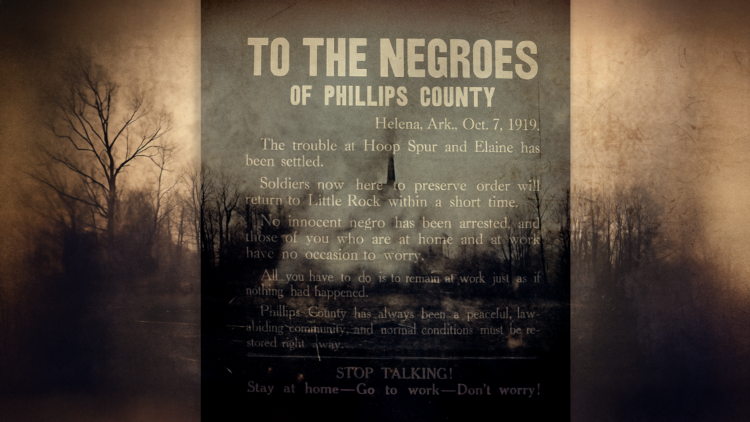
In the Arkansas Delta, memory remains contested territory. The Elaine Massacre of 1919—among the deadliest incidents of racial and labor violence in U.S. history—was a systematic campaign of terror and erasure. Broadsides ordered Black residents to “stop talking,” courthouse records quietly shifted hands, and a hush-mouth culture took hold, enforcing an official silence across generations. Functioning as a domestic colony, the Delta was named “the American Congo” by civil rights activist William Pickens for its brutal incorporation into global systems of colonial extraction and racial domination.
We Have Just Begun, Michael Warren Wilson’s ideologically powerful and formally innovative film, attends not only to what is missing from the official archive, but to what has been actively obscured or disavowed—most strikingly the post-massacre transfer of land deeds that local authorities and historians continue to contest. Through blurred archival images, hand-rendered collages, choreographed collective movement, and an immersive soundscape shaped by poet Tongo Eisen-Martin and composer Joshua Asante, Wilson develops an aesthetic of haunting felt through bodies, land, and atmosphere.
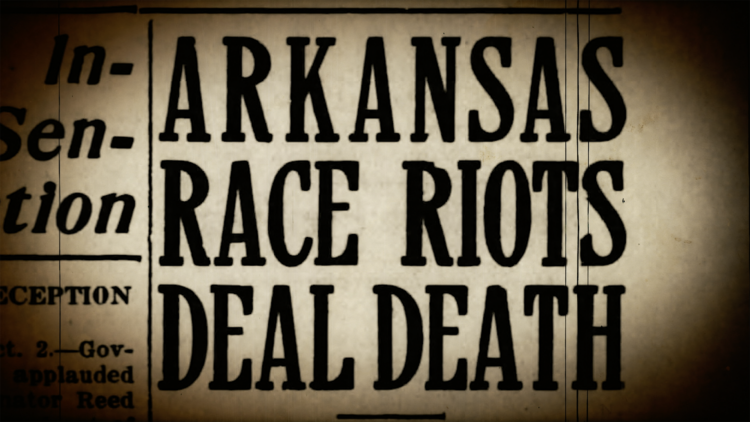
This work of listening and recovery situates We Have Just Begun within a longer tradition of Black journalism and political witness. In 1920, Ida B. Wells published The Arkansas Race Riot, a searing investigation that exposed the massacre as a coordinated attack on Black labor organizing and land ownership and documented the torture, sham trials, and death sentences imposed on the imprisoned men, who came to be known as the Elaine Twelve. In addition to exposure and mobilization made possible through investigative journalism, Wells notably includes armed resistance as a necessary response to racial terror, particularly when the law refuses to protect Black life. In Wilson’s film, Wells’s words—read by her granddaughter, Michelle Duster—return as intergenerational call, linking past and present with voices that defy erasure.
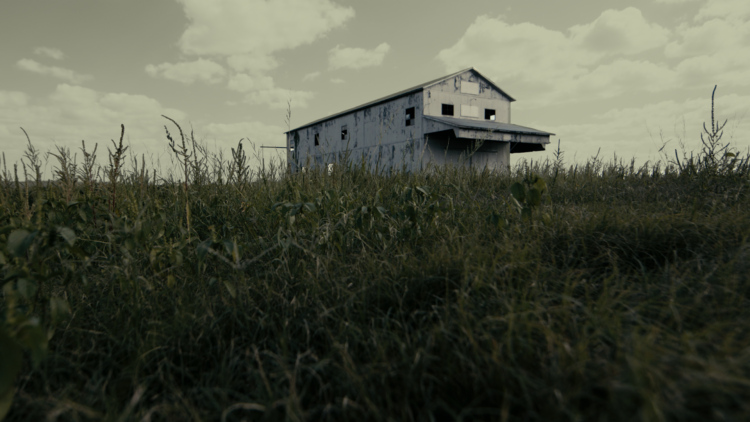
The film’s recovery of history is not confined to voice and image but unfolds as well through collective, embodied presence in spaces long marked by terror. Wilson works with Elaine residents and descendants to stage vigil-like gatherings in barns, fields, and main streets—sites historically bound to alienated labor, surveillance, and racial violence. Occupying space together, participants perform acts of reclamation, transforming sites of dispossession into provisional grounds for bearing witness.
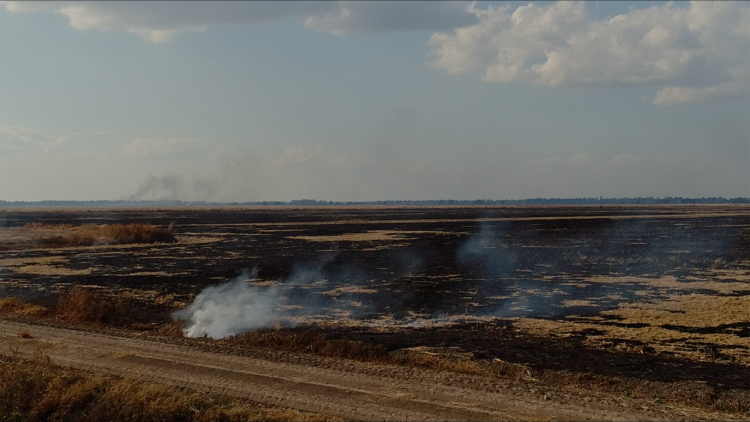
The film demonstrates, however, that the violence of Elaine did not end in 1919. Residents describe the process of long massacre: the ongoing afterlife of terror in the form of land dispossession, industrial agricultural practices, toxic exposure, and premature death. Here, colonial extraction reappears as what Rob Nixon has called slow violence: a diffuse, accumulative, and structurally normalized form of violence, visible in poisoned water, pesticide drift, and the erosion of food sovereignty in a region still viewed as expendable. By locating contemporary environmental devastation within the same continuum as the original massacre, the film reframes ecological harm as historical violence in extended form.
This attunement to continuity also animates the film’s live performance version, in which Eisen-Martin narrates, and Asante performs the score in real time. Stripped of fixed sound and stabilized voiceover, each performance reactivates the film’s central claim that remembrance is not static, and that solidarity is itself a form of haunting. In this sense, We Have Just Begun names both the organizing password spoken by Black farmers in 1919 and its resounding summons.
Jenelle Troxell: Could you begin by saying a few words about the Elaine Massacre, which some of us might know disturbingly little about?
Michael Warren Wilson: The Elaine Massacre was a particularly intense incidence of Jim Crow violence that occurred in the Arkansas Delta in 1919, and it involved Black farmers and domestic workers who were forming hybrid unions/fraternal lodges throughout the Delta in order to collectively market their crops outside the control of local cartels. Their organizing and the general gains Black people were making in the area threatened white ruling class hegemony, so the local elite fabricated a threat of Black insurrection and slaughtered hundreds of Black men, women and children with the help of lynch mobs, deputized posses, and federal troops.
The violence was minimized at the time and broadsides posted throughout the Delta ordered people not to speak of the incident. For nearly 100 years, its scope and impact were kept hidden. Even now, people are afraid to talk about Elaine—it still functions as a cautionary tale to reinforce social hierarchies and white dominance. The number of people killed is disputed, but the oral histories suggest a toll much higher than any comparable racial conflict or labor battle in U.S. history.
JT: Your film foregrounds the writing of investigative journalist and anti-lynching activist Ida B. Wells, read by her granddaughter Michelle Duster. In Southern Horrors: Lynch Law in all Its Phases (1892), Wells asserts that a Winchester rifle should have a place of honor in every Black home, used for the protection the law refuses to give. Later, in the Arkansas Race Riot (1920) tract, Wells details how the accused men’s actual crimes were organizing into a union, seeking fair market price for their cotton, and buying land of their own. Why was the Delta farmers’ move to organize such a threat, why couldn’t the law and its agents be relied upon to protect them, and how might it relate to the First Red Scare?
MWW: I think one of the most salient points we tried to emphasize is that Black people in the rural South were always well-armed. Dr. Charisse Jones-Branch, a scholar of Delta history, argues that the armed resistance in Elaine was not a unique phenomenon in the South. This challenges the common assumption that agrarian workers—rural Black workers specifically—were, or are, too docile to fight back in revolutionary ways. Similarly, Wells is right to emphasize that worker organization was the core threat to the Delta ruling class. This speaks to the South’s role as a zone for super-exploitation within the imperial core—hence the film’s emphasis on the colonial nature of the Delta, where more extreme brutality is used to discipline labor to extract super profits.
The first Red Scare was a response to global and domestic threats to the capitalist class. All over the world, workers were striking, sabotaging production, occupying workplaces, demanding worker control, and generally challenging capitalist ownership. The Red Scare was a counter-revolutionary operation intended to root out revolutionary threats and remove them. Leftist political radicals were harassed, deported, imprisoned, and murdered. Organizations like the Socialist Party and International Workers of the World, were raided and virtually destroyed by the FBI at this time—in fact, the FBI was basically established to combat leftist activity emerging in the 1910s. You can see the entirety of Jim Crow as the development of political technology to maintain the sort of cheap labor established under slavery.
JT: I was particularly struck by the revelation that Williams Pickens coined the term “American Congo” in 1921 as a name for the Mississippi River Valley. How did the region function as a domestic colony, and how might it continue to do so today?
MWW: William Pickens was born in Arkansas and became a really important figure in the early years of the NAACP, beginning with his work as a journalist for The Crisis. He was an excellent orator and went on to represent the NAACP at anti-imperialist gatherings throughout Europe, as he spoke seven languages.
Most of us don’t think about the Black Belt—the agricultural zones of the American South with large Black populations—as a separate colony of the U.S. But the region has always functioned as a zone of extraction and sacrifice, executing the most extreme forms of exploitation necessary for capitalist accumulation. Mechanization forced people out of the area and into deeper poverty. Health, education, and cultural life have been largely destroyed in this region because it no longer requires an educated population to manage the harvest and transportation of commodities extracted from the soil. The few small, cooperative farm projects which once supported entire communities are gone. Much like other colonies, the Delta has become an investment project for large financial interests who treat the inhabitants as obstacles to profit.
The irony is that despite the very real destitution in Elaine, many sharecroppers owned personal land—a fact that is denied by most local historians to this day. Elaine was no rural Black Wall Street, but we know from the book Black Boy that Richard Wright’s uncle owned a tavern and several rental properties. Clearly, many of those properties were seized by white people after the massacre.
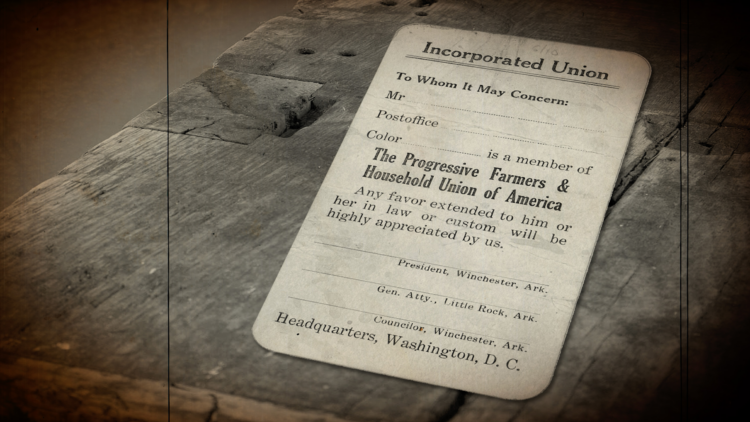
JT: How was the film’s title derived?
MWW: Part union and part fraternal lodge, the Progressive Farmers and Household Union was the organizational framework for the workers in the Delta. They organized collectively to bargain with and sue the planters and merchants, but they also used secrecy to their advantage like a fraternal order. An example of the latter is the use of passcodes to identify membership. According to various sources, on September 30th, 1919, the passcode was “We have just begun.” We chose that to be the title of the film since the Elaine story is only now being told by the descendants and is known beyond the Delta. It’s also resonant of white ignorance surrounding the true nature of the massacre and dispossession of Black people. We’re trying to extend that message of solidarity and determination into the future.
JT: The film begins with the title card, “We return. / We return from fighting. /We return fighting.”, a quote from W.E.B. DuBois’s “Returning Soldier,” first published in The Crisis in 1919. How did you arrive at your literary inclusions in the film, which engage a rich intertext of Black visual and expressive culture?
MWW: DuBois and others writing about Black collective action no doubt had an influence on people like Robert Lee Hill, the founder of the Progressive Farmers and Household Union of America in the Delta. DuBois promoted Black social cooperatives and that logic of organized cooperation was emerging as the spirit of the time, with revolution abroad and labor troubles domestically. Militant Black publications like The Messenger were actually calling for revolutionary activity throughout the South. Mass strikes were promoted, but most of these uprisings were brutally crushed. Black veterans were returning, as Tongo says in the film, “to a country trying to kill them” because they embodied a trained fighting force that could challenge white capitalist dominance. The Black activist and intellectual Harry Haywood, a WWI veteran, writes about the 1919 riots in Chicago as his radicalizing moment. Ida B. Wells visits the prisoners taken during the massacre and becomes their most visible advocate with her pamphlet, The Arkansas Race Riot. Claude McKay writes the great poem “If We Must Die” just prior to the Elaine Massacre in September 1919, so these are literary responses to the turbulence of the times that would soon become the Harlem Renaissance.
JT: You also advance this tradition through your collaboration with poet, Tongo Eisen-Martin, who is co-writer and narrator of the film. How did you decide to work together?
MWW: I met Tongo at a friend’s bookstore in San Francisco called 34 Trinity in 2018. It is basically a militant outdoor gathering space in the city’s financial district. Tongo’s “reading” was a rapid-fire invocation of revolutionary consciousness. There was no text—he performed from memory. We started talking afterward and he mentioned his recent work in Mississippi with Cooperation Jackson and his roots in Clarksdale, just a short distance from Elaine. He immediately agreed to join the film and we started working on it during his artist residency at Headlands Center for the Arts. Tongo has also been a producer on the film, helping to keep the project alive through nearly constant adversity. We worked through the narration together line-by-line, but his lyrical style is present throughout the film.
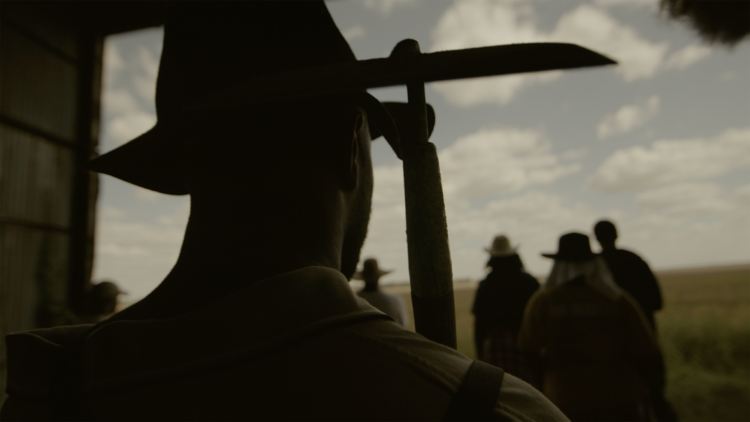
JT: How did you create the soundscape of the film, which is made up of original compositions by Joshua Asante, as well as traditional hymns and labor chants, and which seems to bind together lamentation, resistance, and transcendence?
MWW: The Mississippi Delta is the birthplace of American music. Sound was really core to our experience of Elaine and was always going to be important to the film. It constitutes a kind of supplemental oral history deepening the testimonies. Joshua Asante, who grew up in Phillips County and has roots in the Elaine area, was the first person recommended to me by several people familiar with his work in Arkansas. I was attracted to his music because he is steeped in the gospel/blues of the Delta but has also toured all over the country and holds an Afro-Futurist orientation that reaches far beyond his roots. There are always multiple impulses moving together in his work and he seamlessly synthesizes a lot of different sound traditions. As a sound recordist on the production, he was able to help lay the foundation of the sound design, and his voice and vision were really crucial to the film.
We worked with several extremely gifted Elaine-area musicians, such as Vera Rodgers and Leonora Marshall, to record period songs and spirituals used in contemporary religious services. Tongo also brought in Bay-Area virtuoso Brandon Kendricks to provide supplemental guitar. I wove these recordings together with ambient sounds and textures recorded across Phillips County over the six years of field production.
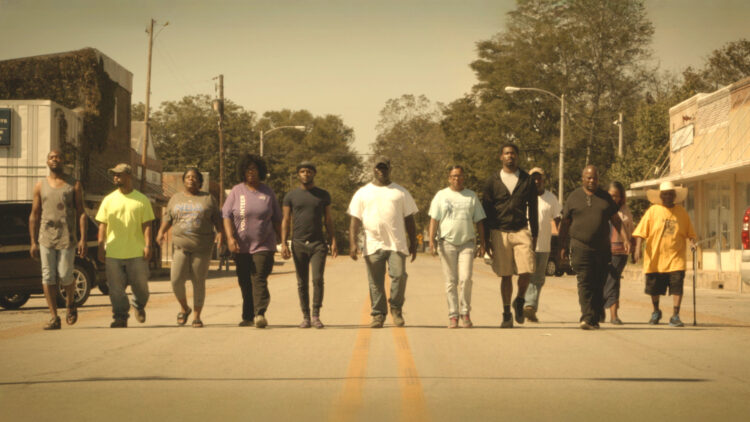
JT: Throughout the film, you rework the documentary practice of reenactment in poignant and powerful ways. I’m thinking of the scene where people seem to be standing vigil in the barn, with the light streaming through the rafters, and again when they are walking together down the main street in Elaine, near the end of the film.
MWW: I wasn’t interested in literal reenactment as a model, both because it is ethically dubious to ask descendants of a race massacre to do such a thing, and because it doesn’t do justice to the complexity of the event and its legacy. One of the participants, Arthur McClinton, told me that he had been hired to run frantically through the nearby woods many years ago for a film crew that later abandoned their effort. I didn’t want to leave that kind of memory. Instead, we worked together with Elaine residents and descendants to construct tableaux vivant and choreographed movements of people that felt empowering. Walking meditatively through the killing fields of 1919, standing vigil in a cotton gin, emerging from ruins, and choreographing a western-style power walk down main street, were the results. The power walk was significant because it required that we spontaneously shut down and re-route traffic—mostly white farmers going in and out of town—which felt like a moral victory for the participants. No one expected us to pull that off, so we were pretty excited once we shot that scene—high-fives all around.
JT: You create a unique, deeply resonant aesthetic in your film, employing slightly blurred historical footage. Tell us about this effect and the impulse behind it.
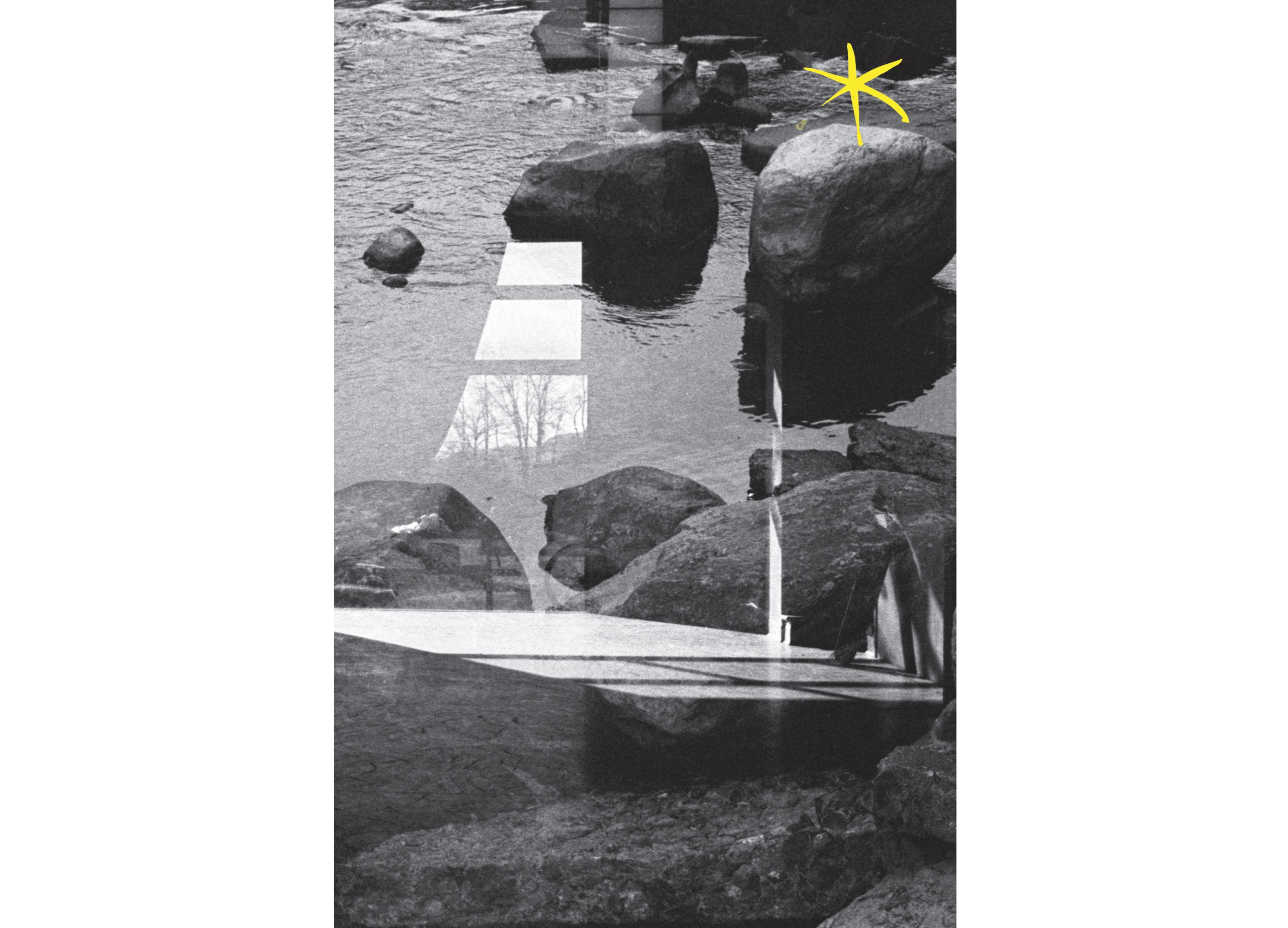
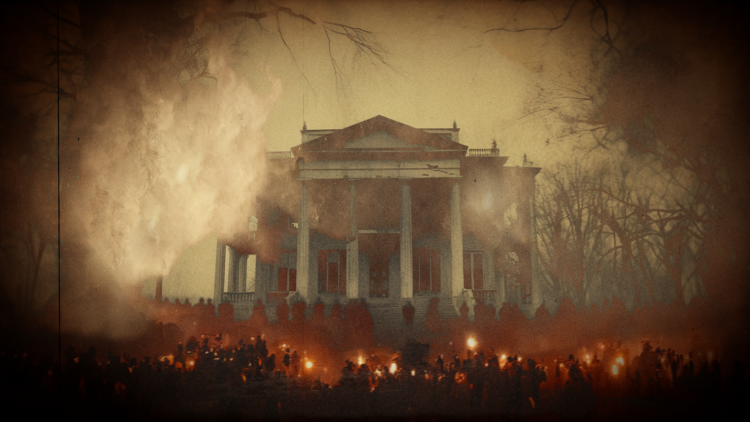
MWW: Because of the secretive nature of the Elaine sequence, very few photographs of the conflict exist. We know that a film made during and after the conflict was shown in Little Rock but it appears to be lost or destroyed. There are a few short films of federal soldiers marching in formation at Camp Pike from the era and several blurry photos, but nothing substantial. I took the sepia-toned and hazy imagery of these fragments and imagined what someone with antiquated 19th Century equipment and poor materials might have captured if they had been operating in the Delta, where no such documentation exits until the 1930s. I built hundreds of images from fragments of archival photos over which I drew and painted—so they’re collages that resemble archival photos or drawings that were made quickly and under duress. They also contain a lot of blurred movement and details, but the overall tone is dark, haunting, and subtly animated sequences that accompany the spoken word as opposed to illustrating it. Hopefully, they imbue the film with a sense of urgency and instability, reflecting the precariousness of life during the massacre and the difficulty of documenting such events. The blurred, damaged, and fragmented quality of these images speaks to the impossibility of fully capturing the massacre’s horrors, much like photographs taken under life-threatening conditions and locked away in attics to deteriorate for 100 years might fail to fully stabilize or cohere. That seemed to be the most effective way for us to represent these fugitive, invisible events surrounding the Elaine Massacre and aftermath.
Elaine residents discuss this haunting, particularly of the swamps and wooded areas where their ancestors were brutally murdered. These specters might offer an approach to the lingering questions posed by Judge Wendell Griffin, “What harms have been left unattended, and how has disregard for those wounds affected life in Phillips County, Arkansas, the U.S. across the last century?” Residents speak of strange figures appearing in anachronistic clothing at sites thought to hold mass graves. They speak of haunted lynching sites. These shifting, ghostly figures emphasize the massacre’s unresolved legacy, suggesting that the past is not static but actively haunting the present.
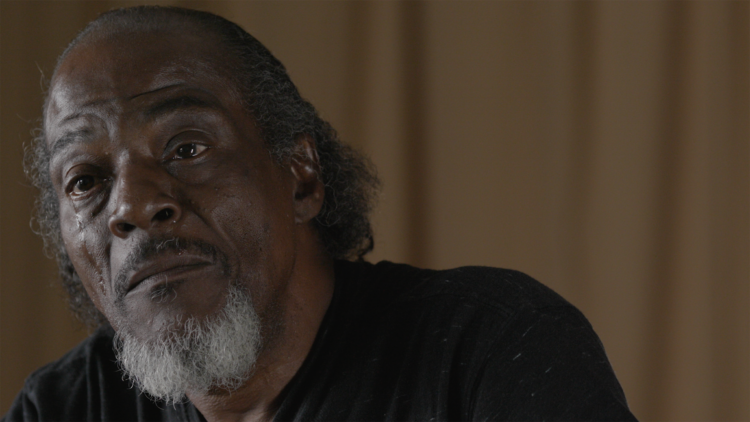
Imelda O’Reilly: A researcher uses the term “Long Massacre” in the film to describe a new kind of war which has to do with land ownership, and how it allows wealthier populations to control food supply. Could you talk about how this is affecting life in the region today?
MWW: The Elaine Massacre a long veil over the area—typically seen as poor despite the immense wealth being extracted from the people and the land. The massacre was an intensification of Jim Crow dynamics, made visible, but these same dynamics are still at work today as more insidious forms of violence. For example, descendants of the 1919 ruling class still own significant parcels of land in the area, which is dominated by industrial farming for large agricultural conglomerates. There is virtually no Black-owned farming in the region and Black land ownership is much less common today than in 1919. The industrial farming is highly mechanized, so there is not much demand for labor. The commodities produced from the land are sold to out-of-state distributors and the proceeds go to the absentee landlords or major corporate landowners like the Teachers Insurance and Annuity Association of America (TIAA) which owns many of the “killing fields” in and around Elaine. The population suffers from malnutrition due to the scarcity of fresh food, as pesticide drift is so ubiquitous that small-scale growing is almost impossible. The water is contaminated by fertilizer and pesticide runoff, and the air is contaminated by the crop dusters who regularly fly and spray over residential areas. The entire county is a sacrifice zone with Superfund sites and chemical spills that are never properly addressed. Disease is rampant—in fact, seven people who I interviewed for the film have since died of cancer. This quiet massacre has continued for decades, making the area one of the least livable regions of the country.
IO: Could you speak about the “hush mouth” culture, which, as seen in the film, exists to hide trauma?
MWW: The “hush mouth” was, and is, a key way of maintaining white, ruling class control. Originally, broadsides were posted all over the county ordering Black people to “stop talking, go to work, go home, don’t worry.” When I first arrived in Elaine in 2015, the hush mouth was all I encountered. It took several trips before I was able to connect with anyone who would speak candidly. This silence works to hide the bloody truth of massacre and property theft but also to protect traumatized people from the devastating memories of exploitation and violence.
Today, this tradition continues through official denial of land theft post-massacre. Some Arkansas historians, compromised by their connections to local landowning elite, vigorously oppose the notion that Black people owned land. Upon release of the film this year, some local historians scurried to condemn it on the grounds that accusations of land theft were unfounded. No other claim in the film was challenged but this one, hardly the central theme of We Have Just Begun. Why is policing the legitimacy of land theft claims the central concern for historians of racial violence? Meanwhile, no concern was raised for those featured in the film who have died since the film wrapped—six deaths from cancer in a place being bombarded with pesticides. Like any good cop, their primary function is to maintain status quo property relations.
JT: You address the issue of land theft following the massacre, when great transference of properties to a small group of people inexplicably occurred in the Phillips County courthouse. Reverend Mary Olson describes how deeds were illegally changed, which you show concrete evidence of in the film. Nevertheless, the film’s land theft claims met with staunch resistance. Could you comment on the nature of this opposition, the impossible burden of juridical proof, and the ways in which your film might open a different kind of space for descendants’ voices to be heard?
MWW: A central tenet of the criticism the film received in Arkansas was that oral histories constitute insufficient evidence, particularly in supporting claims of land theft during the massacre. This is a stunningly retrograde academic position. While oral histories should be critically assessed, they are invaluable for reconstructing events where marginalized communities were excluded from formal records. Rejecting these sources not only ignores their importance but perpetuates the historical erasure of Black voices. The same historians who defend this position have admitted that a significant number of important documents have been intentionally destroyed, so their position is incoherent. By demanding a particular form of documented evidence, these critics adopt a restrictive approach that undermines the broader truths oral histories reveal about systemic oppression and the lived experiences of African Americans in the Jim Crow South. Another flaw in their critique is the narrow focus on whether the documentary adequately proves claims of land theft instead of accepting these new oral histories as part of the evolving story. It ignores the broader systemic dynamics of the Elaine Massacre: racial violence, economic exploitation, and the suppression of Black agency. Even if land theft was not the primary motive (and I don’t think it was), the massacre cannot be understood outside the context of entrenched white supremacy and economic control in the Arkansas Delta. Through fixating on this single issue, critics steer the historical conversation away from narratives that implicate powerful landowners in systemic injustices. These arguments function as historical revisionism aimed at preserving the status quo—narrowing the discussion to specific claims about land ownership and theft and obscuring the broader patterns of exploitation and systemic racism in which powerful landowners may have been complicit.
IO: How can we ensure that land ownership is restored, and reparations are made for the massacre and decades of theft, abuse, and neglect?
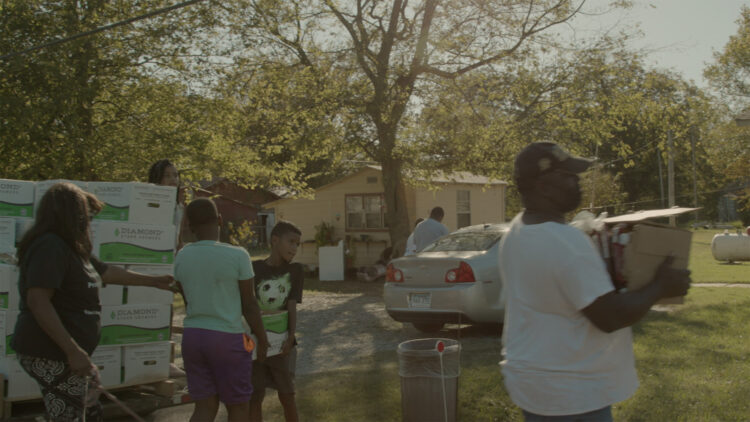
MWW: A campaign is growing to demand that TIAA give back the land upon which the massacre occurred. People in South Phillips County understand the evils of industrial farming all too well and intend to build a sustainable alternative on any lands that they obtain. This is a worthy goal and we support it. But as Tongo says in the film, “as long as there are Capitalists, resources for them to steal, and people to violently exploit, there will be peculiar institutions.” Elaine is a frontline community in the battle for food sovereignty and sustainable resource cultivation. This “surplus population” that refuses to leave their ancestral home for easier lives should be an inspiration to anyone wanting a more equitable world. We should form material bonds of solidarity with Elaine in order to help them continue resisting the Long Massacre. Their insistence upon restitution and restoration of stolen property has major ramifications for Black people across the South and beyond.
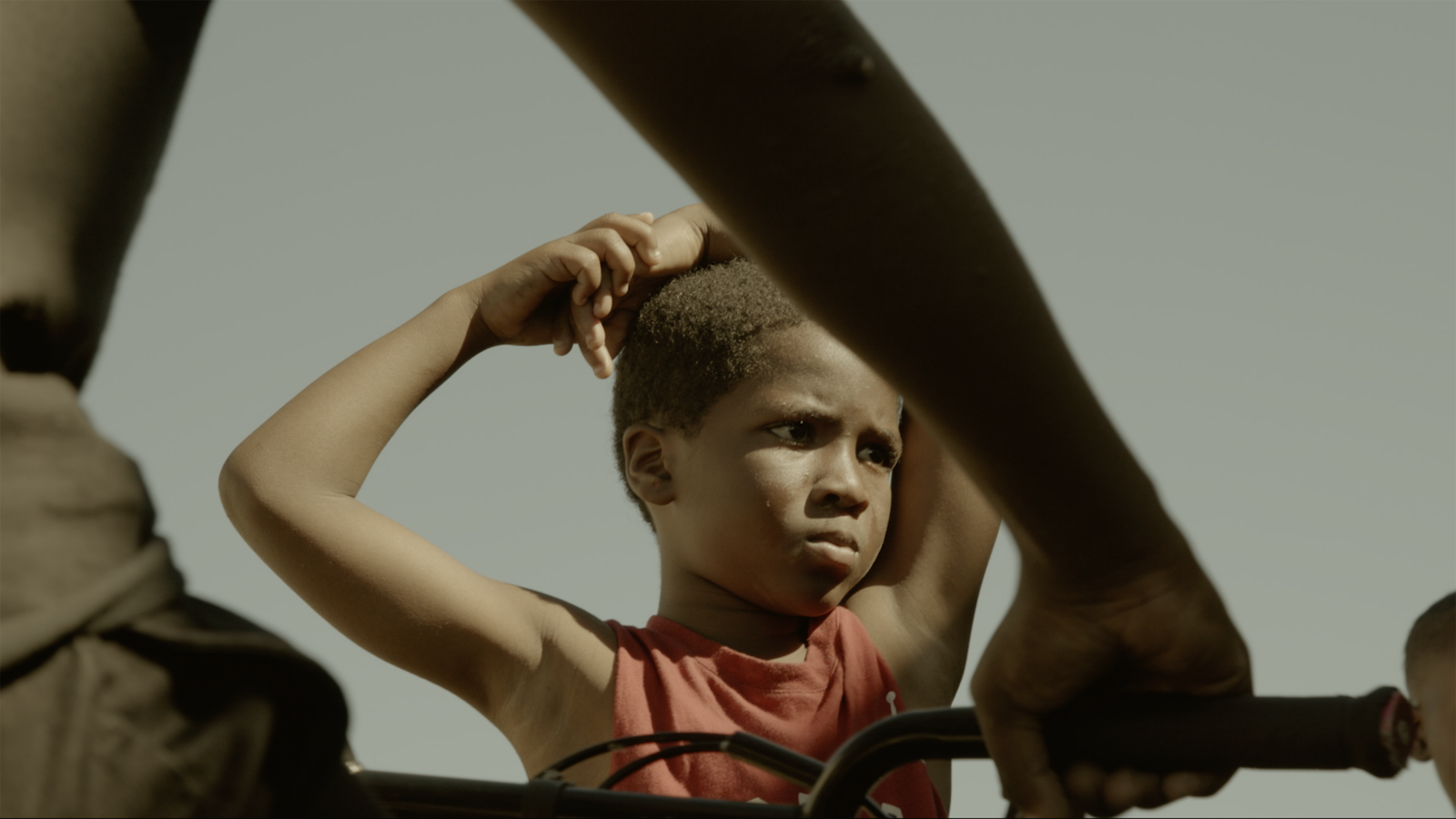
Legacy Center | Film Still, We Have Just Begun
JT: I was particularly moved by your choice to include Claude McKay’s 1919 sonnet “If We Must Die” in the closing scene, which returns us to our conversation about the highly charged political inter-arts relationships this film advances. What was behind that choice?
MWW: While researching this period, I realized that the Harlem Renaissance emerged out of this post-war crucible of social upheaval. “If We Must Die”—this enduring militant call to action—is a germinal text that exemplifies this emergence. It was published in July 1919, in the middle of a nationwide outbreak of racial violence known as Red Summer, and then republished in The Messenger, a Black socialist magazine, in September—just prior to the Elaine conflict. We thought it was important to include the entire piece, so Tongo’s reading of it goes underneath a sequence we shot on the main street running through Elaine, separating the Black and white sides of town. We worked with descendants to shut the street down for a couple of hours to create a Western style “power walk,” which felt very empowering for the people involved. There were several shoots in the Elaine area that functioned like this—occupying the killing fields, doing the same at a local cotton gin—performances of ownership, reclaiming lost land, if only for a few hours. When I first arrived in Elaine in 2015, the fear of speaking out about the massacre was palpable, but after years of interviews and work to uncover the story, people were publicly demonstrating their intent to reclaim their history.
JT: The way that the residents of Elaine, many of whom are descendants, make their stories heard and reclaim space with their bodies resonates so profoundly throughout the film. Where do you see this going next?
MWW: We have produced a live version of the film that strips the narration and music, so that Tongo can narrate live and Joshua can play a live score. We’ve previewed it in Upstate New York and will perform it later this year at the Beineke Library at Yale. The live aspects of the screening add urgency and immediacy to the event, so I hope it is something we can continue to explore.
We Have Just Begun is available for institutional licensing and community screenings at Video Project.