

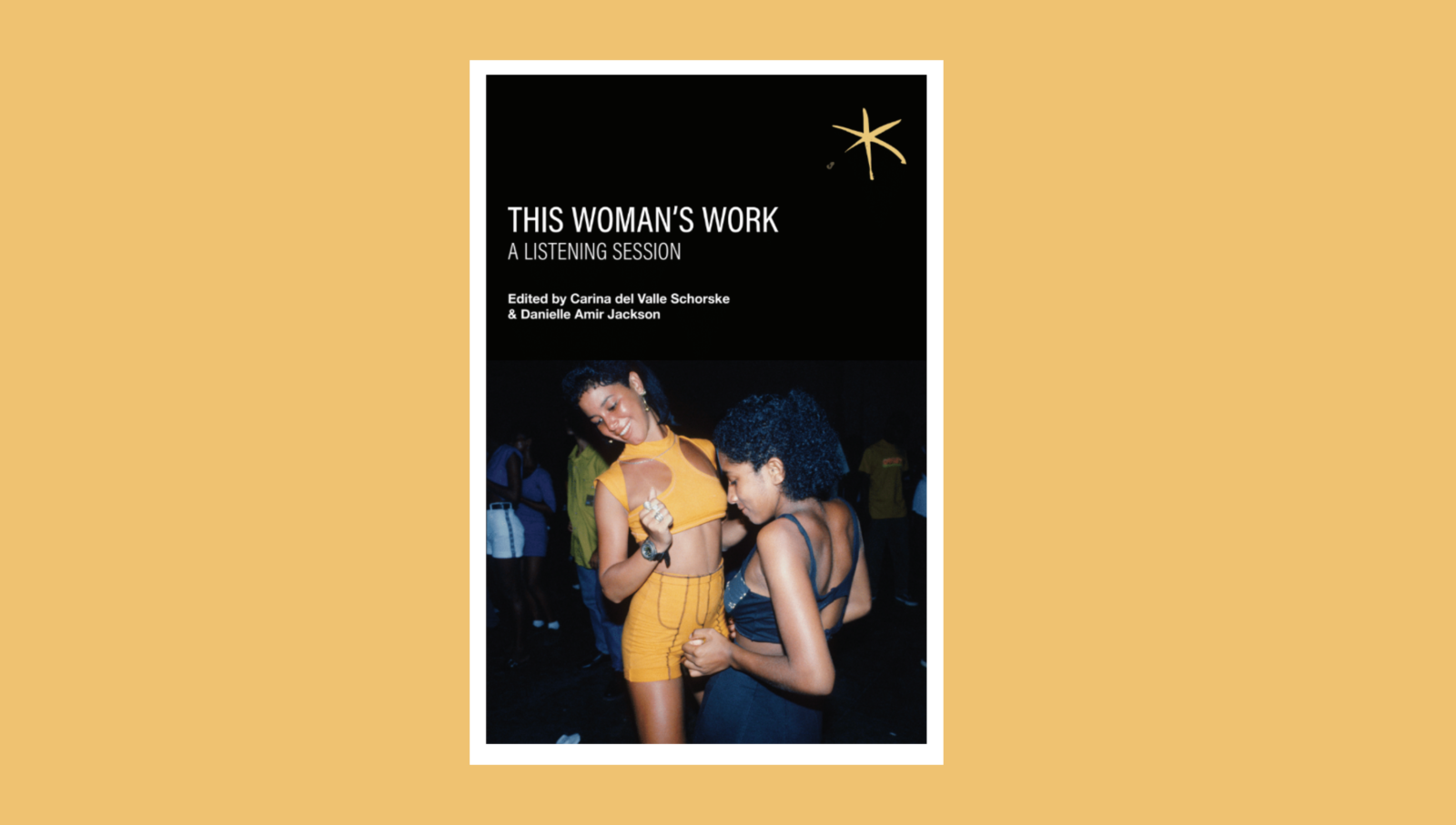
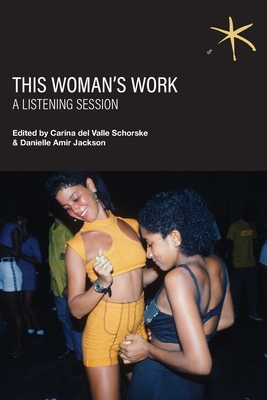
This Woman’s Work: A Listening Session chronicles the feminine and feminized labor behind-the-scenes in hip hop and reggaeton:
(rank misogyny aside) / What About Us / my squad in a burned-out building on Adams and Crenshaw / Giant Step / Save the Robots / a blood-blue Farrah Fawcett wig / I miss magazines / scrambled eggs and quenepas / tiny silver halter tops / she used to fuck with my dude / if I am an archive / get a bitch to translate / te he querido, te he llorado / gliding backwards at the Crystal Palace / Princess Loko / Shirley Brown / no time to funk around / my twins on my back / spinning the block / estranged from the choir / perreo-distas en coro / encore, encore, more more more / the alto section / the mark of the plural / Carolina / Canóvanas / Chicken Noodle Soup / to sell your life story / —hand out, palm up— / the slender complexities / the scholarly KoolAid / storm or no storm / our affair’s endless syllabus / a blown speaker, a fumbled aux cord / the girl get them girls / and then we hit Play
all of the pieces are available to read online for free below
or for purchase in-print at
wordupbooks.com
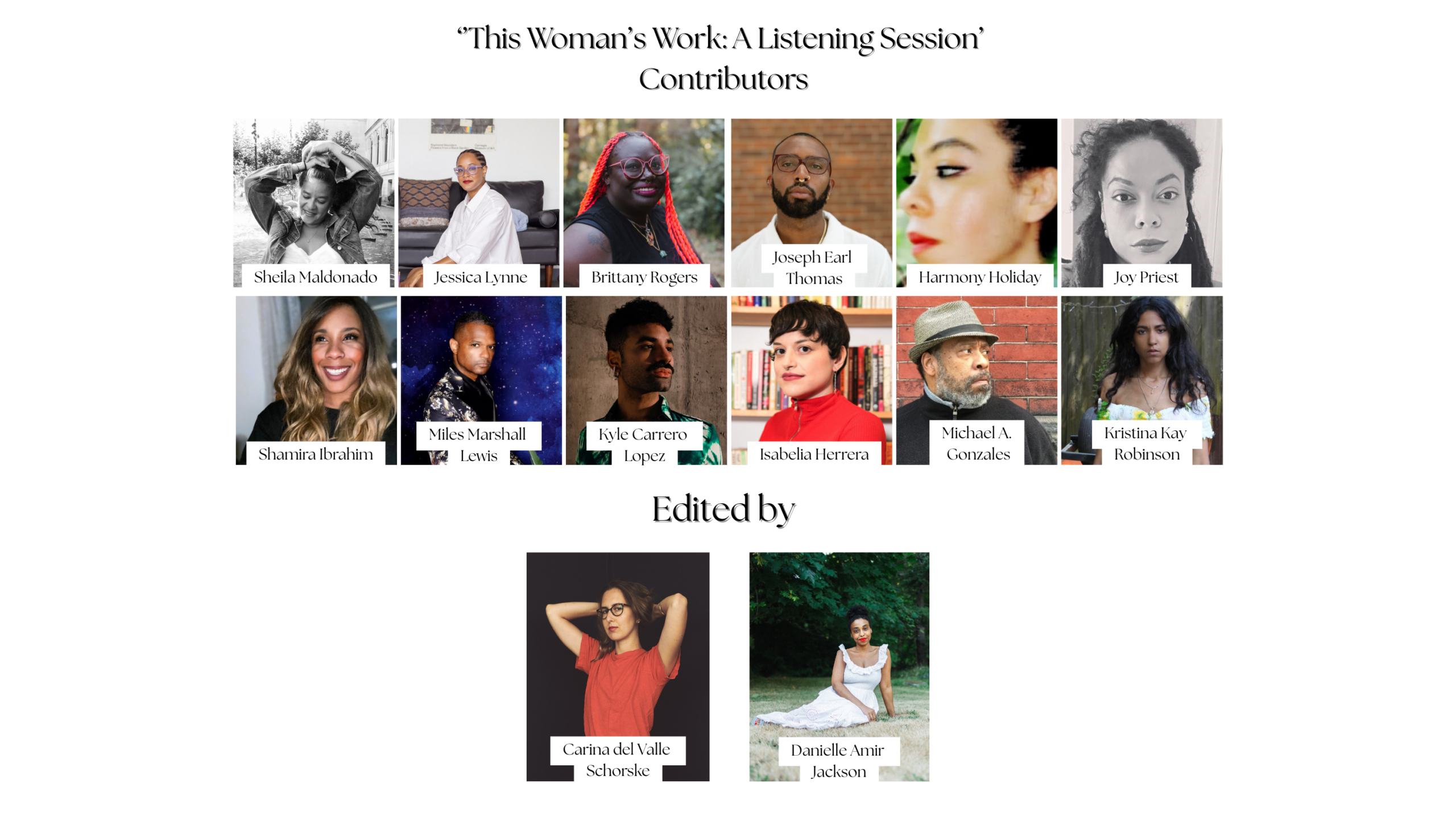
Table of Contents
- Letter from the Editors (below)
- “If Your Girl Only Knew: Missy Elliott’s Offstage Sonic World” by Jessica Lynne
- “Self Portrait as Aretha’s Gold Purse” by Brittany Rogers
- “Crate Digging in the Freelance Files: An Interview with Sheila Maldonado” by Carina del Valle Schorske
- “Showtime’s Here: Litefeet’s Lady Legends” by Shamira Ibrahim
- “Performance Studies” by Kyle Carrero Lopez
- “Inside the Loop: On Chanting, Houston, & Solange as Producer” by Joy Priest
- “Shoot Your Shot: An Interview with Alice Arnold” by Michael A. Gonzales
- “Girlhood or, So What if Diamond is a Stripper Name” by Joseph Earl Thomas
- “Perreodistas en coro: Tracing the Roots of Reggaeton Journalism” by Isabelia Herrera
- “Love Up On Them: An Interview with Sheena Lester” by Miles Marshall Lewis
- “Grief is a Many-Headed Monster: A Mixtape” by Kristina Kay Robinson
- “A Literary History of My Romance” by Harmony Holiday
Masthead for This Woman’s Work
- Editor-in-Chief/Founder • Angie Cruz
- Guest Editors • Carina del Valle Schorske & Danielle Amir Jackson
- Publisher/Founder • Adriana E. Ramírez
- Senior Editor • Amanda Tien
- Managing Editor • Chandreyee Ray
- Contributing Editors: Sheila Maldonado, David Lo
This Woman’s Work was made possible with generous support from Critical Minded. Aster(ix) print issues are published twice a year with additional content online. Aster(ix) is funded in part by the Dietrich School of Arts and Sciences and the Department of English at University of Pittsburgh, as well as by the School of the Arts at Columbia University.
Letter from the Editors, Carina del Valle Schorske & Danielle Amir Jackson
This Woman’s Work: A Listening Session
Carina: Where does this project begin for you?
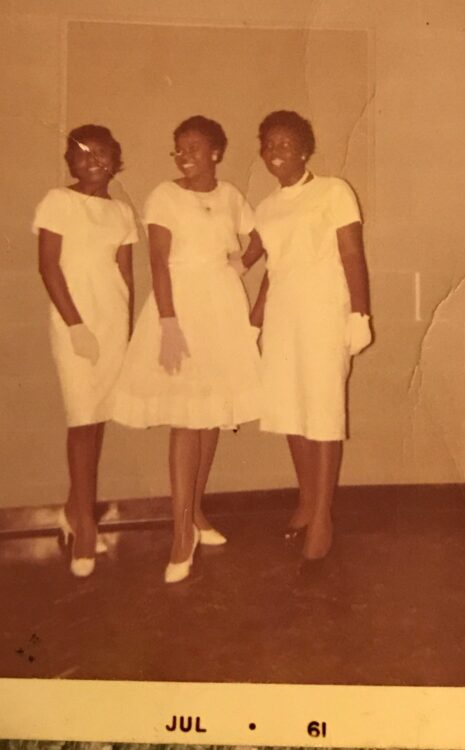
Danielle: Space is the place, the place makes the space. So I begin by marking this space with a map. I grew up in a port town in the middle of an alluvial plain that became a music city with a matrix of recording studios, vinyl pressing plants, juke box distributors, guitar manufacturers—plus scores and scores of side men and women who gigged at home when they weren’t on the road. On Sundays, one cousin was the church’s choir director, coaching harmonies, choreographing the group’s steps for marching in; another played the organ. Meanwhile, the older, worldly cousins beatboxed at our auntie’s kitchen table and hustled tapes by Three Six and Tommy Wright. The scene in Memphis in the nineties, when I was coming up, was not as thriving as it was in my mother’s day, when Stax and Hi Records set the pace for pop music, tussling with Motown and Philly International on the national charts. My mother was part of this scene straightforwardly. At 17, she sang second soprano in a girl group called the Debs, and they traversed Black Memphis, playing talent shows at feeder schools for record labels like Douglass, Booker T., and Manassas. The accompanying pianist was her nephew. By the time I was growing up and listening, Memphis’s musical prime was a memory. This memory split and scattered like falling stars. Out of these fragments came Memphis rap.
The fragments are everywhere, everyday—woven into our rhythms. I am interested in the caretakers of this ambient, haunted inheritance and the air that keeps it living. Who kept the time in the girl group? Counting down, tapping her own thighs, signaling to let the other singers know when to enter a song? Who kept the band on the one? Who designed the stage concepts and costumes, both so critical to Black music, for, in the words of Portia K. Maultsby, “in African American culture, the element of dress in musical performance is as important as the musical sound itself.” Audiences of Black music expect a certain feeling of “aliveness” in secular and sacred performance, which manifests in enthusiasms that feel enticing to all of the senses. And to their performers, the audiences give this livity right back. The singing along, swooning and sighing, hooting and hollering from the crowd is a crucial element of the most acclaimed live music LPs in Black music history.
This Woman’s Work comes out of deep reverence for this tradition of collective, participatory aliveness. And out of an obsession shared by both of us: of the timekeepers, the scene setters, the mood-makers, the cowbell and the tambourine and the castanets, the break-girl, the video chick, the stylist. It’s background as foreground, background as method.
Carina: When you mention hand percussion I think of the slave system’s prohibition against African drums for Black people in much of the continental U.S., New Orleans being the notable exception. I also think of more community-based prohibitions against women playing the big drums of the Caribbean: barriles, tumbadoras, congas. In both cases, hand percussion was a way around these laws—the tambourine in the Pentecostal church or, in Puerto Rico, women on maraca, on güiro.
The subtitle of our project—A Listening Session—comes from afternoons my mom would spend at the apartment of Latin jazz musicians Andy and Jerry Gonzalez in the Bronx back in the 1970s, just playing record after record in silence. The Gonzalez brothers and many other Latin musicians from the so-called salsa era also passed through the apartment of a man named René López to study his collection of Afro-Cuban 45’s. But even if men formalized this structure, gave the jangueo an institutional gravitas, my mother’s first listening session was certainly her mother’s living room. In the late 1940s, before she migrated, my grandmother had a radio show in Puerto Rico—actually two shows, one where she was the DJ (“Una media hora romántica con Carmencita”) and one where she sang boleros with Julito Rodríguez on guitar.
My grandmother wasn’t able to continue her performance career in New York, but music remained at the center of her life in many ways. She was the first person in her family to migrate, so her apartment was always the social hub and boarding house for new arrivals. Family parties meant everybody singing and dancing, hand percussion, all that. Upstairs were some Cuban neighbors who ran a venue called La Barraca; my mom saw La Lupe’s first show in New York when she was maybe nine years old. My grandmother’s longterm boyfriend was a Syrian Argentine who booked Latin talent for New York clubs. I have to think she chose that boyfriend for what he could bring to the table, musically speaking. The record collection was thick. My mom remembers Arabic language singers like Oum Kalthoum and Fairuz alongside all the great experimentalists of the mambo era: Arsenio, Machito, and the two Titos (Puente and Rodríguez). Later, my mom would help me make sense of the sonic connections between that pentatonic Middle Eastern stuff, Spanish flamenco, and West African rhythms. How that interplay was already happening in the Mediterranean even before it happened in the Caribbean and American South.
Danielle: Islam has been an influence on the African Americas pretty much since the “first moderns” arrived on these shores. Centuries before NOI and The Final Call, Arabic writing was carved on the pews of a Black church in Savannah built in the late 1700s. Circling back to the now, Beyoncé often mentions her admiration for Fairuz.
Carina: You can hear it so clearly in those runs!
Danielle: We loved G-Funk in Memphis, courtesy of Great Migration flows (Tennessee, Arkansas, and Mississippi to Cali was a popular route, like in the case of Snoop’s people). And probably the drug trade. Tell me about California. I know you grew up in the Bay Area.
Carina: It’s true! Growing up, a lot of the music I heard through my mother was telling me about places that my family had left behind: Puerto Rico, New York. Still, the Bay was formative, especially in how it forced me to analogize and compare. For example, I noticed how Chicano listeners were the ones mediating the connection between the reggaeton from Puerto Rico and Miami that was just becoming mainstream and the hyphy music that sounded, to me, so much like crunk. Which I guess makes sense when you track Great Migration flows from Louisiana to California, or more individual trajectories, like Too $hort moving from Oakland to Atlanta then collaborating with Lil Jon. What all those regional musics have in common, for me, is an emphasis on rhythmic play over narrative. I tend to gravitate towards rappers who don’t disdain dancers.
I should also say that I went to school with the children of Carlos Santana and the bassist from the Grateful Dead. Both of my parents loved that hippie rock. I did and do too, butI was always on high alert for the women—like Prince’s drummer Sheila E, who was the daughter of the talented Latin jazz percussionist Coke Escovedo, from Santana’s band. I actually saw Sheila E perform recently, when my visit home coincided with the Marin County Fair. With hip hop, I loved hearing stories about Tupac’s godmother, Assata Shakur, or his creative writing teacher, Leila Steinberg, who ran a workshop in Marin called “The Microphone Sessions” and became his first manager. To me, our zine’s emphasis on listening partly comes from this maternal directive to listen up, oye bien, hear me good, not just to the music but to the life lessons it imparts, and the social worlds that sustain it.
Danielle: Why the focus on hip hop and reggaeton in particular?
Carina: That’s a good question. Maybe just: that’s what was topping the charts as I came up, and I feel a certain responsibility to my own generation. I also think the dominant critical narrative about hip hop and reggaeton tends to foreground the misogyny of these urban genres. Of course, we have to name, condemn, and mourn this violence: I can’t stop thinking of Puffy’s victims, or Drew Dixon’s effort to hold Russell Simmons accountable for rape, or the relatively recent murder of the queer trap star Kevin Fret in Puerto Rico. But these genres have never been unique in the ways they incubate and protect abusers. With This Woman’s Work, I’ve wanted to reckon with my lived experience of hip hop and reggaeton as sites of feminine community. This particular project is more about what we’ve done than what’s been done to us, though both matter, and can’t be disentangled.
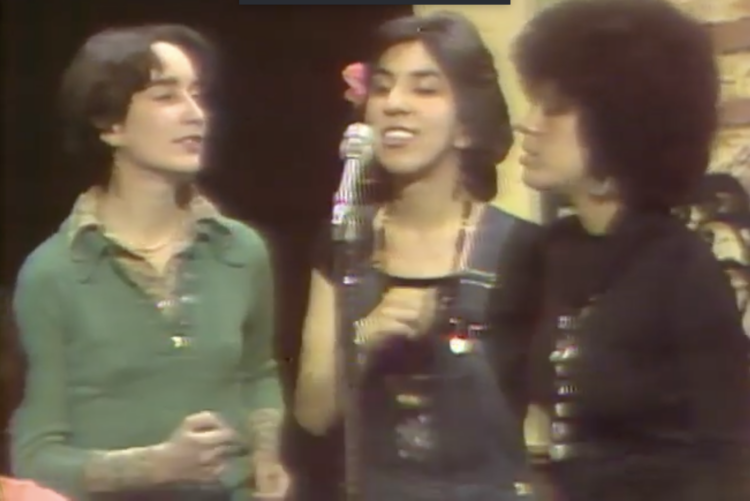
Another answer I could give has more to do with us specifically, as a pair, since we met in New York working on New York stories, in the catalytic capital for both of these closely related genres. In your role at Longreads, you ended up accepting a pitch for a story I’d struggled to place, tracing a genealogy of Puerto Rican backup dancers in the U.S. entertainment industry from Rita Moreno through Rosie Perez, J.Lo, and video girl choreographers like Danielle Polanco. Around the same time, I started editing your story about the Lorraine Hansberry revival for The Point, which is also a story about the city, and even includes a crossover moment: Rita Moreno starred in Lorraine Hansberry’s final play and served as a pallbearer at her funeral. Another unexpected intersection: growing up, my mom was friends with the child of an interracial couple who lived on Riverside Drive, and Lorraine Hansberry was his godmother. His actual mother was a skilled seamstress, and she made my mom a purple crocheted miniskirt and crop top set that she used to wear to perform Motown covers with her rock band in college. I guess that’s all pre hip hop and reggaeton, but those cultural exchanges set the stage for the genres we’re focusing on here.
We became friends through the work. I was just blown away by the depth of your knowledge: both your own musical inheritance (Memphis proud!) and how attuned you are to the flows of people, capital, and culture through the Black world. I think we agree that once you start paying attention, there’s no way not to be an internationalist. I often resent the absence of that expertise at other publications. When I profiled Bad Bunny for The New York Times Magazine in 2020, I relied on other Latin journalists who had profiled him before me, and I realized they were literally all women or nonbinary people: Julianne Escobedo Shepherd, Isabelia Herrera (featured here!), Suzy Exposito, and E.R. Pulgar. All the publicists were women, too. So I started thinking harder about the work we do on behalf of a genre that doesn’t always love us back.
Early in her career as a music journalist, Isabelia wrote a couple of really interesting stories tracking down memorable but anonymous voices: Jenny La Sexy Voz, who sang lots of the hooks on major reggaeton hits, and Gina Figueroa, who is the woman you hear talking in Spanish at the beginning of D’Angelo’s “Really Love.” Gina was actually the song’s co-writer, and a major creative influence during the Voodoo era, when they were lovers. She was sharing Eddie Palmieri records, Afro-Caribbean religious music… fertilizing the creative territory. Just as Harmony Holiday recounts sharing books with one of hip hop’s great producers during their clandestine romance.
Speaking of D’Angelo, you recently wrote a great story about the women who participated in D’Angelo’s musical education… everyone is so quick to say his father and grandfather were preachers, but as you note, so were his mother and grandmother! What are your thoughts on the genres this project takes on?
Danielle: Thank you, and when I think about Gina Figueroa’s writing on “Really Love,” I think of how much it improves, deepens, and counters any saccharine vibes of the central text. D’Angelo says, in the verses, “I’m not an easy man” kind of casually; Gina’s prelude articulates how. We’re missing so much when we’re not listening well, which sometimes means listening more than once, and can mean translating, or being curious and looking things up.
About hip hop and reggaeton, I’m interested in the continuum and continuities, the “changing same” of Black musics and musicking. What got left behind when Union Planters seized Stax’s assests—including its master tapes—in 1975? Before shutting down, something like a decade after its commercial apex, Stax cut hits on Shirley Brown, the Dramatics, and Albert King: “Woman to Woman”; “In the Rain”; “I Can’t Hear Nothing But the Blues.” Within two decades, all three songs were sampled by prominent hip hop acts like Public Enemy, Juelz Santana, and Wu Tang. By itself, “In the Rain” has been sampled in rap at least 125 times.
During the early years of Memphis hip hop, I was a small child learning to gangsta walk and glide backwards at Crystal Palace skating rink. Gangsta walkin’ seeded jookin’, of course, which is related to bounce music in New Orleans as well as the kind of intricate, super-fast balletic movement that Shamira Ibrahim illuminates in her piece for this issue. I recall coasting with my best friend Tesha to the Geto Boys’s “Damn it Feels Good to Be a Gangsta,” with no concept of what a “gangsta” is. We were responding to the freedom we felt in the groove, which is partly lifted from a minor funk hit from the ’70s recorded by the band Ripple. Joyce Cobb, once signed to Stax, taught me about Memphis Minnie when she recorded a song on public access television with my elementary school’s chorus. She’d also recorded with Willie Mitchell, who produced Ann Peebles’s “I Can’t Stand the Rain” in 1973, a soul lament Missy would cover, sample, and interpolate for her debut, as Jessica Lynne discusses in her story here. At the same time that I was learning early lessons on Memphis’s musical heritage, Gangsta Boo was upstaging her crew with femme and fire 16s. What is time? In the spirit logic of Black sound, yesterday is today is tomorrow.
Carina: You’re so right. For some reason I have this super vivid memory of dancing to the Ashanti / Ja Rule duet “Always On Time” at my friend Kyrah’s house party in Somerville sometime around 2010: the girls spontaneously cyphered up to sing and rap along with every single word. Ja Rule’s verses naturalize romantic neglect and infidelity—love is about pain—but the chorus is kind of metaphysical. I’m not always there when you call / but I’m always on time …something about how the near misses of both personal life and community history can’t quite be called misses, they still count as connections. At that moment in Somerville I felt we were inverting the song’s discourse a little bit, as if all of us were, as women, singing back to hip hop: I’m not always there when you call, I’m not always going to consent to being interpellated in the way you’re interpellating me, and that’s one reason I know I won’t appear in the genre’s official history, but I am always here, always on time, always sustaining the groove, softening the verses with the chorus, switching up the roles to feel towards freedom, making this a space where you want to linger. What forms of intimacy are enough to merit singing about, mourning, or studying on?
Danielle: This project is about kitchen table conversations between aunties and sister friends; talking-tos about no-account men and the ones worth loving; secret codes and information passed between those in the know; intimacy inside the circle where rituals are set to music. We are privileging women’s knowledge acquired through pillow talk, the classroom, the bandstand, or somewhere in between. Very much in between working on our own personal projects, you and I have had hours of conversations about our wishes for a different type of criticism—one that might make space for the knowledge of the crowd, or of the background singer who kept the night thrumming long after twilight and made another day, another morning seem less like dying.
Carina: Totally. Some people act like women only “count” for music when their bodies enter the spotlight of stardom on stage. I love Celia Cruz, for example, but we miss so much if we treat her as the only woman in salsa. When I interviewed Eddie Palmieri, he spoke about his wife Iraida, who grew up near the Apollo and taught him so much about bebop and blues. Decades later, when the big dance halls were closing, she saved his career by encouraging him to downsize his band and pivot to the Latin jazz circuit. Or I think about my mother DJing every night at the New Rican Village before the band came on. I also think of journalism as part of this collective musicmaking project. Palmieri said something like that when we met, which was gratifying, because musicians don’t always appreciate the harmonic character of our work—dissonant harmonies, but harmonies just the same! This Woman’s Work is kind of like the liner notes to the liner notes. It’s for the backstage babies, the ones who will never get profiled for the covers of glossy magazines. Still, I would never deny the presence or power of stars!
Danielle: Not paying attention to stars wouldn’t be genuine, since in a quite literal sense stars light the darkness, as well as pathways otherwise unseen. In this project and in others, mapping networks and communities of relation consumes us. So does following the path. Aretha Franklin, for example, is a figure many would not expect to see in a journal dedicated to hip hop and its offshoots unless you follow her songs into their afterlives—“Rock Steady’s” long list of samples, or her very proto-Black feminist emphasis on self-worth and getting one’s due. Where she was born on Lucy Avenue in South Memphis is a stone’s throw from the Stax studios; where her father came from in the Delta is near Bobby Bland and B.B. King’s hometowns. Famously, of course, the Franklins became well-known denizens of Detroit. Their whole journey as a family follows the trail of the blue note’s North American line, from the plantation South into industrial centers in the Midwest and the coasts. One could follow the note and the rhythmic licks of the Beale Streeters’ band, which both Bland and King were part of, to early reggae and dub recorded in Jamaica. Roots and routes, especially the way women inhabit and travel them, are also shared preoccupations that are reflected in this zine.
Carina: Right. Stars come from somewhere, and they go somewhere too. You mention Aretha’s emphasis on “getting one’s due,” and that’s the subject of Brittany’s poem, which ingeniously speaks from the perspective of Aretha’s purse. That’s where she would keep the cash she demanded as up-front payment for her performances. A woman’s accessory, so often seen as merely decorative, becomes a spotlit symbol not just of how hard she works but of how hard she works to get paid what that work is worth. Kyle’s poem also plays with point of view, speaking through La Lupe’s “beau-to-be.” But I read the title, “Performance Studies,” as reflecting Kyle’s own formation as a gay millennial schooled in queer theory, two generations removed from La Lupe’s live performance, finding a certain solidarity of yearning with this straight man in relation to the diva’s apparent freedom: “How would it feel, were it seamless the way she / makes it seem?” This, to me, is woman’s work—that self-reflective loop of identification and disidentification happening offstage—no matter who is doing it. As for La Lupe, we don’t get Cardi B without her.
Maybe now I should pause and say something about gender, this implicit understanding we’ve had since the beginning to include contributors who don’t identify as women even as the issue’s focus remains what it is. I think of Joseph’s poem about watching Black girls dance together onscreen, and the envy those socialized as boys sometimes feel in relation to this kind of fellowship… the envy, but also the enabling contagiousness, the invitation to transgress those gendered boundaries “into some kind of after hours death knell / into some sign of myself / with hips and thighs that want and need / color.” Or Greg Tate, famously: “All my life for as long as I remember I’ve wanted to be a Black Lesbian gangsta feminist.” His Black Rock Coalition band was once invited to perform for these undercover “Girl Parties” organized by MC Lyte. What is that Fred Moten says? Black people have a privileged relationship to Blackness, but don’t treat it as proprietary? I think there’s a similar potential in femininity. I benefit from that kind of hospitality and I also want to extend it. I guess I’m still rebelling against segregation. We all benefit from women’s work, so we should all be invested in thinking about it from a feminist perspective.
Danielle: My Black feminist or womanist cosmology has always included people of all genders, even men. Of course it is imperative that I am treasured, that femininity—and Black femininity, in particular—is not disregarded in whatever coalitions we are building. This can be difficult work, but it is iterative, and it is worth it. I think often of my Uncle Frank, actually my first cousin, my mother’s ace: the pianist, makeup artist, and hairstylist for her band. He was the person who drove her to the hospital when she was in labor with me. He once told my sister, “You are a beautiful Black woman.” She was a teenager, then, and it was the first time she’d heard those words. He was a queer Black man who came of age in the South of the 1940s and 50s, back when calling someone black could start a fight. He landed in the Bay and in LA for a time where he worked as an artist. What he learned, what he saw, he brought home to us, a family of women who had to learn to be proud of who we are, or that we could be paid for making art. Misogyny and anti-Blackness remain potent. There’s another mode, though; so much of hip hop is in a register of affirmation and love of self and love of family, and community. Keep ya head up / On my block / you must love me.
Carina: Testimony from a world in which love is often the only currency! We’ve worked on This Woman’s Work on and off for almost five years, alongside our changing hustles as working writers and editors forging careers in a crumbling industry. To quote the song itself (Maxwell covering Kate Bush) I know you’ve got a little life in you yet… how do you think about our project, both form and content, in relation to questions of labor in today’s media landscape?
Danielle: If we are operating in a blues idiom, which the music we are covering in this zine absolutely is, then telling the truth about where we are collectively, emotionally and politically, has to be part of it. I wanted this project to be a love offering and a refusal: a space hidden in the piney woods where writers could elaborate outside of word counts and time pegs and genre conventions. Where they would get the chance to self-reflect. Kristina Kay Robinson joins her poetry practice with her short stories and her beat-making in a crisscrossing, time-bending work of prose that reads like an intellectual biography or a very tender memoir, depending on how and when it hits you. How it looks on the page enacts the same kind of expansive exploration the words do; the piece is just as much visual art as it is something to be read. The zine feels like a very feminized woodshed where dancing and smack-talking and loud singing happen alongside careful study and deep meditation. The writers feel safe enough to name their losses; out of these enumerations and days of mourning, I do believe something new will be born.
Carina: That’s a beautiful answer about form. I also think of Joy Priest’s experiment, which asks how conscious practices of repetition—chants, litanies, what you call “these enumerations”—might offer a way through (if not out of) the repetitious violence imposed from without. In terms of content, This Woman’s Work really grapples with the promises and perils of journalism. There was a flash of possibility in the ’90s for FUBU media, and we learn about it here in the conversations with Alice Arnold, Sheena Lester, and Sheila Maldonado. Not that it was some kind of paradise—there was a lot of nasty competition for resources that were just becoming available to people of color—but the range of channels for cultural criticism from that period looks luxurious in retrospect. And the mainstream magazines used to value our labor as writers in a way they don’t anymore. Sheila remembers Vanity Fair paying freelancers $2/word in 2001, which would be $3.66/word in today’s dollars. Now the only publication that does $2/word is The New York Times Magazine. And we’re all freelancers now, or almost all of us. Which means no benefits, no sick leave, no workplace protections.
I’m really worried about the death of affirmative action alongside the death of staff positions. And what that means for cultural criticism. This is, of course, as much about class as it is about race. We struggle to survive as freelancers, so we lose continuity: how do you build a legacy when people keep rallying and dropping out, rallying and dropping out? Now, in 2025, the New Yorker has zero Latin critics on staff. The New York Times Magazine has just one (not me, I’m a “contributor”). And I know that you were the first Black editor-in-chief at Oxford American. We’re expected to celebrate ourselves when we break these barriers, but what is there to celebrate? The situation is still so remedial. As intellectuals, we want to be able to cultivate a certain standard of knowledge-in-common, so that we can get into the nitty gritty of our histories and trouble the waters more deeply. It’s crazy to regard the tradition of eating black-eyed-peas for New Year’s as “niche.” It’s crazy to have to explain the global significance of salsa music to a New York magazine.
Danielle: It is truly crazy-making. Honestly I don’t know where to begin with the sundry crises of mainstream publishing. I do know that it becomes difficult for the people of color in these situations to collaborate or maintain their alliances with each other, and there’s pressure to compete for the few available roles and opportunities. When I got the OA appointment, I didn’t realize that I was not only the first Black editor-in-chief, but the first Black editor there, period. In a region that is home to most of the Black people on this continent. I’m interested in more than a moment; I’m striving for lasting change, and wholesale change, where we don’t have to count the black or brown faces anymore, and being “the only one” isn’t a mark of progress but a red flag that deserves attention.
Carina: Exactly. Of course, there’s life outside the mainstream media. We’ve always called this project a “zine” even though it’s not cut and pasted by hand, and neither of us really came up through punk. It’s more about that DIY philosophy of making things without the promise of external validation. When we got the grant from Critical Minded, that allowed us to expand the conversation and pay our contributors. It also feels right to work with Asteri(x) as a transnational feminist journal with a long history of bringing labors of love into the light. There’s been a lot of collaboration along the way, people coming in for the relay just when one of us is losing steam.
Danielle: The first editor of Oxford American had a tenure that lasted 20 years, and he used to say, “There’s no way this project can be comprehensive.” Same for This Woman’s Work. What are pieces you wish could have been included? Artists you wish we could have covered?
Carina: There’s so much. I wanted to track down some of the first girls in the Rock Steady crew: Daisy “Baby Love” Castro, Marisol Dominguez, Jackie Quiles. I know some of those names thanks to a beautiful contact sheet of portraits taken by Antonio Lopez, the virtuosic Puerto Rican photographer and illustrator who died of AIDS in 1987, the year I was born. Lately I’m really interested in the choreographer Kiani del Valle, who comes from a more postmodern lineage but has done work for rising stars like Young Miko, RaiNao, and Travis Scott. I still want to do more research about the people in the wardrobe room. Then there are writers I admire who I would have loved to see interpret our prompt: Simone White, Rita Indiana, Vinson Cunningham…
Danielle: I would have loved to publish more visual art, and incorporate more elders—though the art we include is stunning, and we do a decent job of crossing generations. I very much wanted a piece on Thulani Davis to happen. She mentored Greg Tate, of course, and wrote at The Village Voice for many years. She also co-wrote the screenplay for Paid in Full and is one of a few women to win a Grammy for writing liner notes. I admire her interdisciplinary, polymathic restlessness, her audacity to re-invent and keep asking questions.
Carina: So do I! And there’s Greg Tate again: that loss hit hard. Mortality is another kind of incompleteness. Who are some of the people who continue to shape this project for you despite their absence?
Danielle: 2025 has been a tough year of losses. We’ve talked about Ananda Lewis, D’Angelo, DeLana Dameron, Angie Stone. I think about Stone and her group, The Sequence, creators of the first female hip hop record ever released on vinyl, 1979’s “Funk You Up.” I was speaking with the writer Niela Orr about that record today: it’s been sampled so much that a person might feel like those chants emerged out of the ether. Bruno Mars, De La Soul, Dr. Dre, Ice Cube—they all drew from that well. But three teenage girls from the South Carolina Piedmont crafted those words and the rhythm we say them with. Don’t you give up / Keep goin’ / Keep goin’ / Keep goin’ ….. Get up, get up, get up, get up, get up, get up, get up, get up…
This zine is for them.
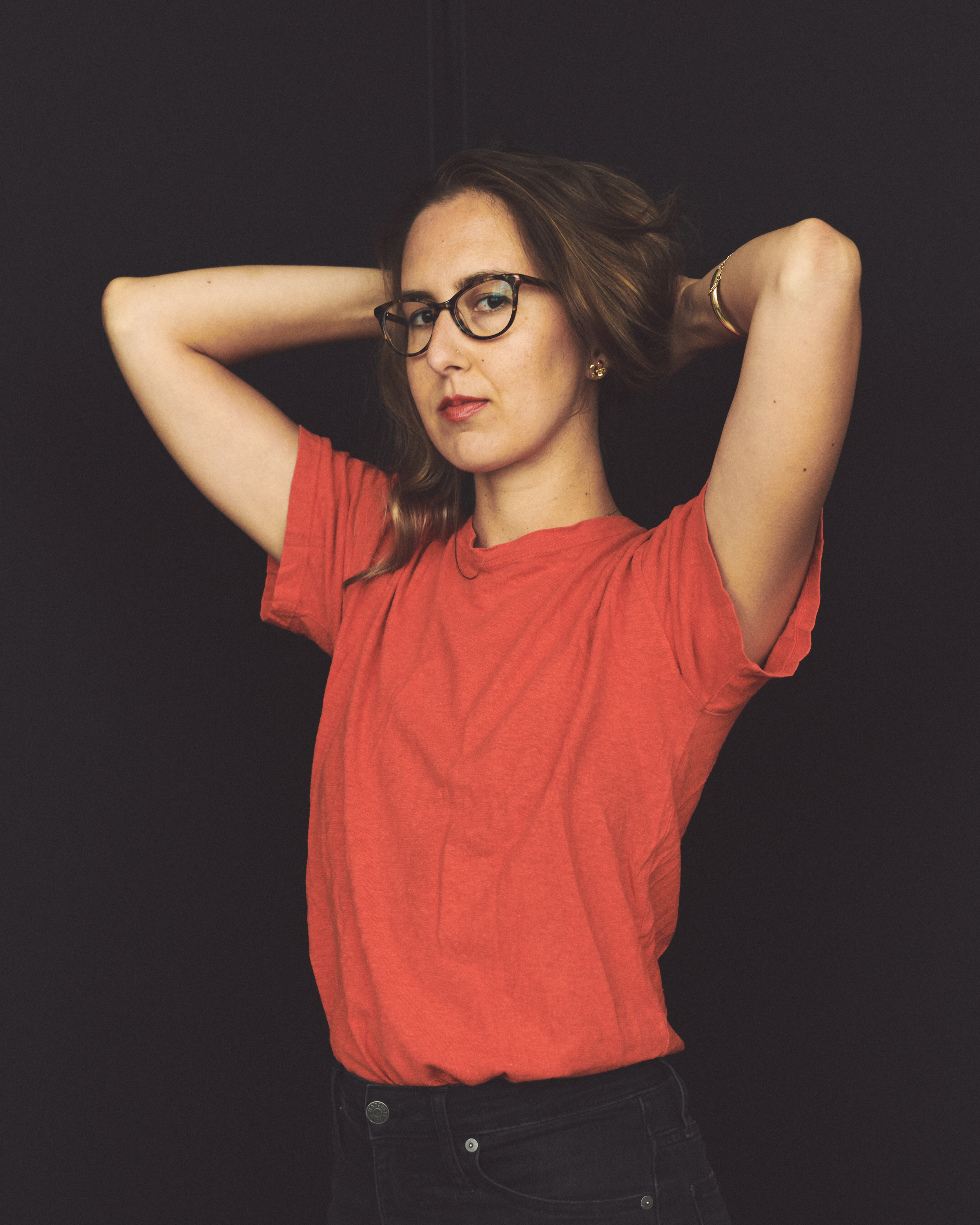
Carina del Valle Schorske is a writer, translator, and wannabe backup dancer. Her essays about popular music—Smokey Robinson, The Pointer Sisters, Leonard Cohen, Eddie Palmieri, Lucinda Williams, and Bad Bunny—have been published in The Believer, Oxford American, the Paris Review Daily, the New Yorker, and The New York Times Magazine, where she is a Contributing Writer. In 2021, she won a National Magazine Award for her cover story on grief and belonging on apocalyptic dance floors. In 2022, she earned her PhD in Comparative Literature from Columbia University. Her debut essay collection, The Other Island, is forthcoming from Riverhead.
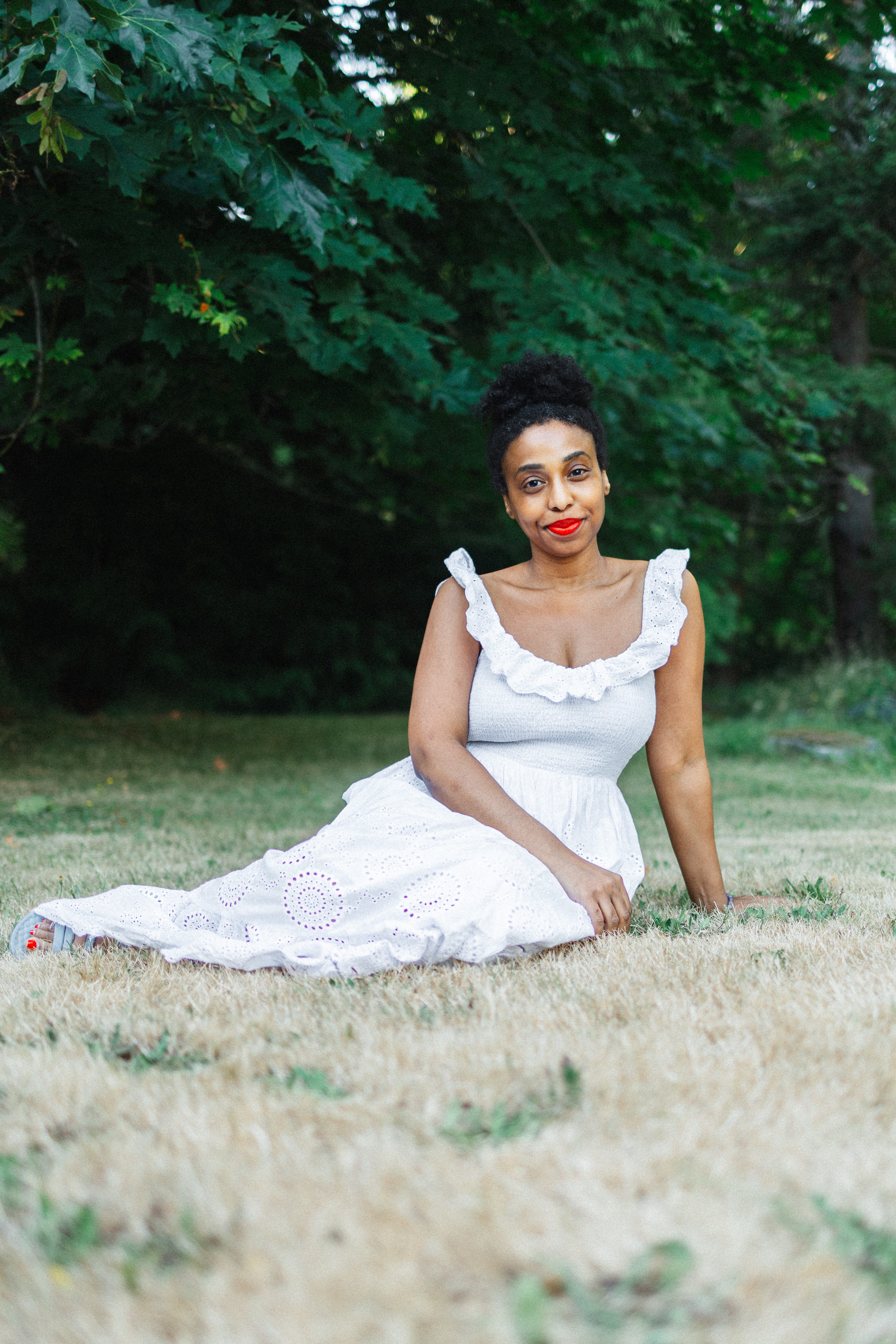
Danielle Amir Jackson is a Memphis-born writer and editor whose essays on literature, music, and film have appeared in The New York Times, the Guardian, the Atlantic, Bookforum, the Criterion Collection, and more. She is the recipient of awards and residencies from New York University, Hedgebrook, and the Aspen Institute, and is at work on her first book, about women in the blues, forthcoming from Farrar, Straus, and Giroux. Danielle was appointed editor-in-chief of the Oxford American in 2021. During her tenure, the OA received the Whiting Foundation’s Literary Magazine Prize, and was a finalist for General Excellence with the American Society of Magazine Editors and the James Beard Foundation.