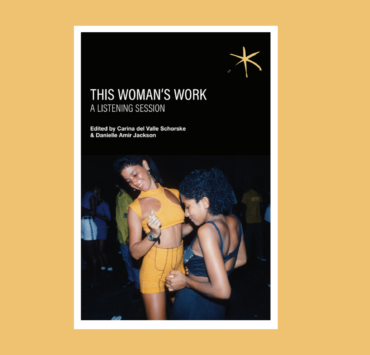


I first met Sheila Maldonado in 2015, at a retreat for the Latinx poetry collective CantoMundo. I had just moved uptown, not far from where my mother grew up, to start a PhD at Columbia, and by then Sheila had made Washington Heights her home for a good long time, though she was quick to tell me she was born and raised in “Koni Ailan,” and that her family was Honduran, not Nuyorican. Both of us had a cynical streak, disidentifying with the category Latinx poet even as we earnestly sought communion inside such spaces and continued down affirmative action’s yellow brick road towards… what? The culture industry’s emerald city was cracking up, or maybe we were just starting to see the man behind the curtain. At that point, Sheila had been factchecking, editing, and writing for magazines like The Village Voice, Latina, and Blaze for almost twenty years. The dream of my own byline still hovered on the horizon, so I was starstruck even by her disillusion—which most often took the merciful form of an observant, critical, and self-questioning sense of humor.
Maybe “starstruck” isn’t the right word, since Sheila and I share an interest in the non-stars, “all underground all unnoticed / my order private,” to cop one of her many coppable lines. She’s broken bread with Phife Dawg’s mother (the poet Cheryl Boyce-Taylor); her friend Macarena Hernández was the reporter who called bullshit on Jayson Blair’s fabrications at The New York Times; she always knows when Tony Touch is planning a pop-up. Together we stan the Spanish Harlem writer Frank Lima, whose reputation suffered from coming up too early for the Nuyorican Movement: “how many aspirins will we take to reach the surface of truth?” But there’s star power here, too, among constellations still unmapped by existing mythologies. Sheila herself has undeniable charisma, whether she’s declaiming at the Poetry Project podium, clearing space on the dance floor, or turning the peanut gallery into a craft class in cultural criticism.
“I am so jealous of how poor you are,” writes Sheila Maldonado in that’s what you get, “your particular stilo pobre,” ventriloquizing not just imagined bourgeois haters but perhaps, as I read it again now, the entire media empire that came to colonize the working class art forms of hip hop and reggaeton. As a native New Yorker, Sheila had direct contact with some of the scenes that reached me only after they’d been monetized, sanitized, and edited for clarity. She knows that not everybody got to cash out, that many cashouts led to crashouts, and that every so-called Golden Age—of hip hop, magazines, even her beloved Maya—is built on human sacrifice. She counts the bodies, her own among them. By refusing the easy consolation of imagining herself as her ancestors’ wildest dreams, Sheila makes space to connect with other forms of inheritance, the way hauling sheets to the urban laundromat isn’t as far from “the washerwoman by a river / scraping rags on a board” as we might wish, or to establish less expected solidarities, as when she runs into a Guatemalan friend from her Quaker school days on line to see Björk spin dance records in Brooklyn. In this crosscultural crucible, in this capital of capitalism, “All we have is our devotion / how we earn our spots / on the floor / identify / who is from a silence / and explode.”
For this conversation, I caught up with my friend at her apartment, which we sometimes call Café Sheila for its ziggurat of tea boxes, generous selection of snacks, and Spanish resistance to rush: at Café Sheila, one conversation always leads to several more, or to a listening session or boogie break, or perhaps to a hunt through her extensive library for a small press chapbook published in 1998. After all, Café Sheila is also an archive housing many boxes fat with magazine clippings, photographs, drafts, and other memorabilia from her long career in print.
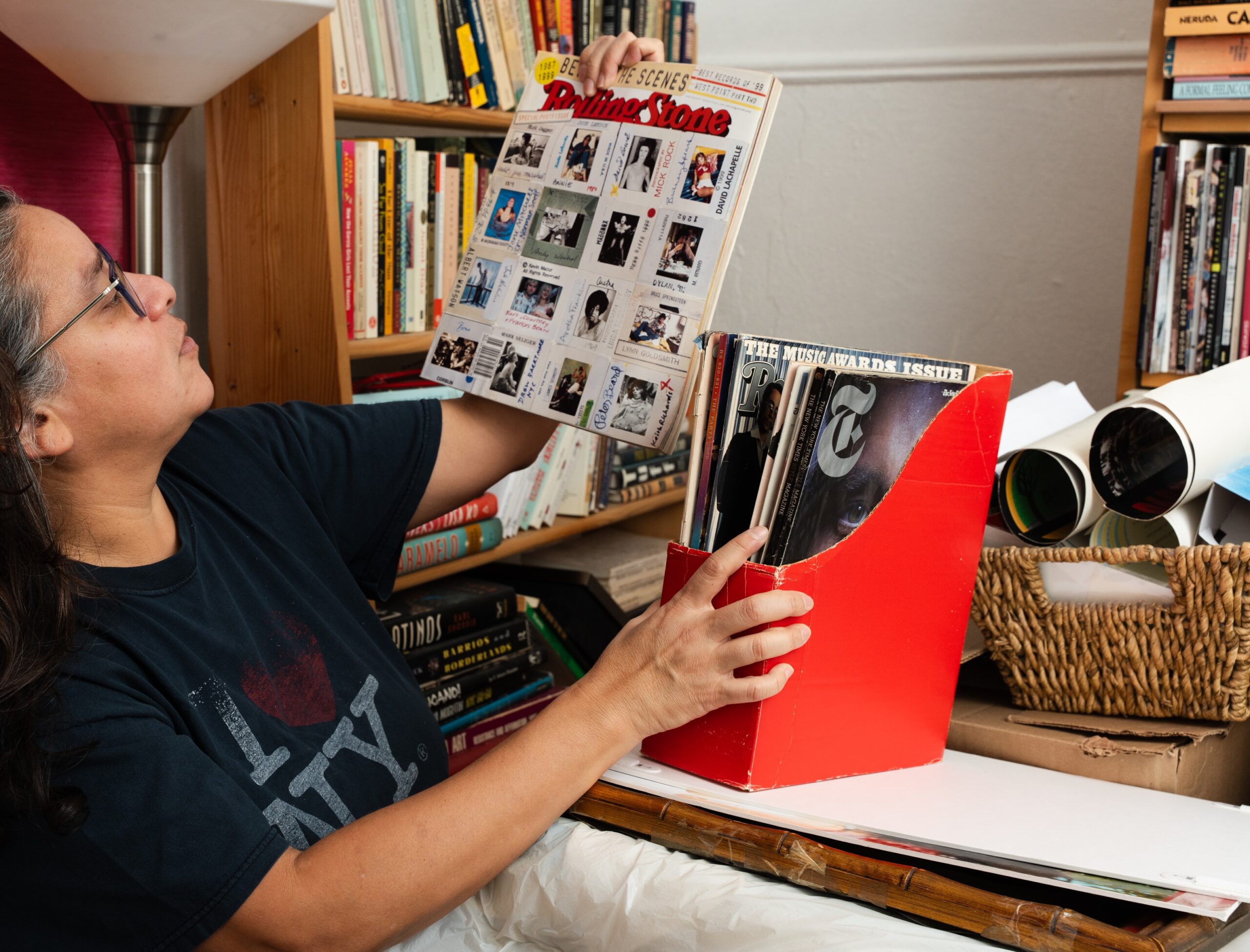
This is not the romanticized archive, record of heroes and triumphs, nor is it a strictly personal stash of receipts ready for the rapturous day when every score gets settled. This is, quite simply, material: someone was smart enough to keep it, so it could be sampled. Reviewing a copy of Urban Latino with Bobbito García headlining—Sheila’s first cover story—I realize she’s kept a paper trail of the Nuyorican generation between my mother and me, filling in the story of the city we traded for my childhood in California. Not for me, I know, but I can’t help feeling like we were destined to convene uptown, to spend some time among the scraps, cutting and pasting between identity and experience.
* * *
Carina del Valle Schorske: How would you describe your musical formation?
Sheila Maldonado: My parents had vinyl, a lot of Latin pop: salsa, merengue, boleros, ranchera, maybe some cumbia. Honduras didn’t have a national music that they were playing. I just found some pictures from Honduran Independence Day parties in New York, and I asked my mama, “What were you dancing to in 1980?” It was Honduran bands playing the music of other Latin people. A lot of romantic shit.
CDVS: I’m never that convinced by nationalist claims on these genres, but I understand what you’re saying: Honduras wasn’t producing a genre that was pan-Latino.
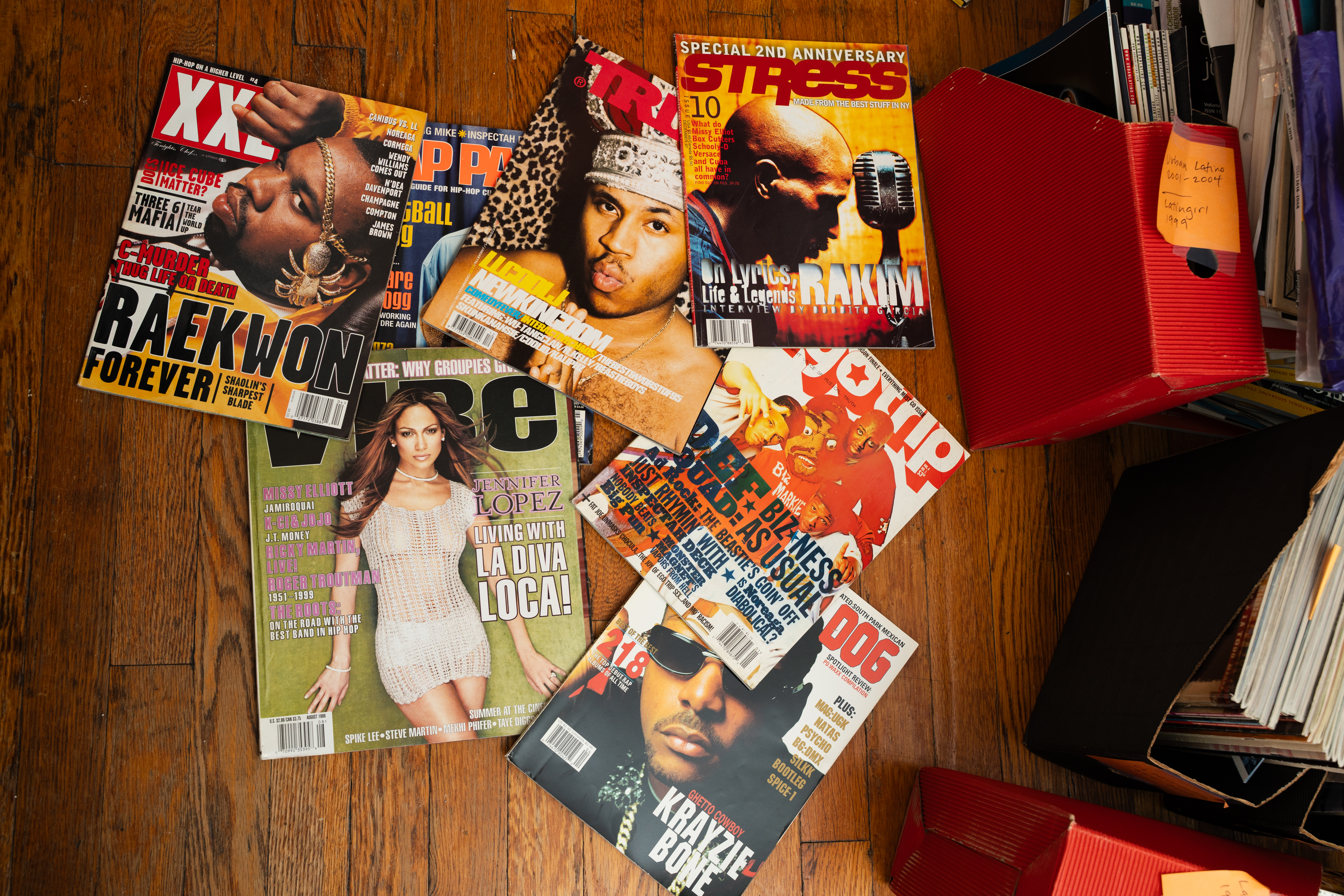
SM: Yeah, until punta. Punta is Garífuna music, but it was popularized, of course, by whiter Honduran bands. In the early 1990s, “Sopa de Caracol” was an explosive song, a global hit, and there’s a little Garífuna language breakdown in there. That was around the same time that Juan Luis Guerra, bachata merengue god of the Dominican Republic, was breaking into the world market. But earlier, as a little kid, I was into pop, so it was Michael Jackson, Menudo, and an occasional rap album. I remember we had “White Lines” on vinyl. My brother loved “Bonita Applebum” and would play it over and over in high school.
CDVS: So you were into hip hop early on?
SM: Not really until college. I mean, I liked “Roxanne, Roxanne”: I remember rapping it in the bathroom mirror at home. I liked the Fat Boys, I remember my father had the vinyl. But in high school I was a big classic rock person, really because of my brother. In 1986 or 1987 we went to Honduras on a family vacation and he ran away to another city where we had relatives. He must’ve been 16. He had come to the U.S. when he was 10 and he just missed Honduras so much, he was like, “Fuck y’all, I’m going to stay.” And that’s where he got into classic rock. Honduras loved Led Zeppelin, the Beatles, the Rolling Stones, and when he came back a year later, he brought all that with him.
So I was big hippie dip. I was in a program called Oliver Scholars that funneled kids of color into private schools, and I ended up at Brooklyn Friends, a Quaker high school. That’s where I got to be the full-on hippie that I wanted to be. Plaid dresses. Later when I went to college at Brown, listening to Native Tongues was not a leap. They could be called hip hop hippies—though that might have been derogatory in some way, since everybody was supposed to be about the streets. They were definitely Afrocentric. A Tribe Called Quest is what I did my freshman year in college. They played at my school that spring. Low End Theory was out and I memorized it back to front, so that people made fun of me like: “What are you doing? Why do you only talk to us in Low End Theory?”
CDVS: Do you think that was a part of your birth as a poet?
SM: I credit my father with the poetry love always. He was a declamador in high school in Honduras. He liked old Spanish romantic stuff like Bécquer—there were copies of that poetry at home in Coney. In junior high I continued the family tradition, reciting Spanish poetry for some contests. Hip hop also felt like pure memorization, and I was easy with it. I remember taking a Shakespeare class right when Biggie came out. And to me those things functioned the same. They were classic monologues that you could recite. You’re defining yourself. You create a really clear role, and I loved stepping into that.
My high school and college years coincided with the reemergence of the Nuyorican Poets Café. I even started a college thesis that I never finished about the Nuyorican and its connection to hip hop. I remember my ex-boyfriend called me fake for becoming a hip hop head. I think it consumed me in college because I was away from the city. I needed to be a New Yorker—that was my identity—and I needed to be a hip hop New Yorker. I was and I wasn’t. I started wearing gold hoops that I’d always had because my father worked in jewelry. He got me a name plate, probably set the stones in it. I had everything, but in high school I was wearing silver and turquoise, like a hippie would. When I got into hip hop aesthetics I thought, “All I have to do is go home and put it on.” I had access.
CDVS: What was your introduction to journalism as an idea or practice?
SM: In high school I got involved in this citywide newspaper called New Youth Connections. I wrote about Honduras, an opinion thing about abortion, a review of Isabel Allende’s House of the Spirits. Lots of people came out of there—Edwidge Danticat, for example, and Mohamad Bazzi, this Lebanese reporter who used to work for Newsday, now he’s a journalism professor at NYU. I didn’t do any journalism in college, but when I graduated I wanted to get back to it. I knew Mohamad did this internship at The Village Voice and so I went after the same opportunity. A high school mate also did the internship—Rob Marriott, a future award-winning writer at Vibe The Voice was what everyone read in the ’90s, everyone worth talking to. You just picked it up for free. Everyone read the classifieds, especially the missed connection section. To work for the Voice, that was a big deal. Of course, the internship was unpaid. I was living at home in Coney Island, and my other job was working with my brother in immigration law, basically like a paralegal. I couldn’t stand the language of the law, so I did that for about two seconds. Then the Voice promoted me: I got something called the “Minority Writing Fellowship.” But it was just like, train fare and $100.
CDVS: What was the work like?
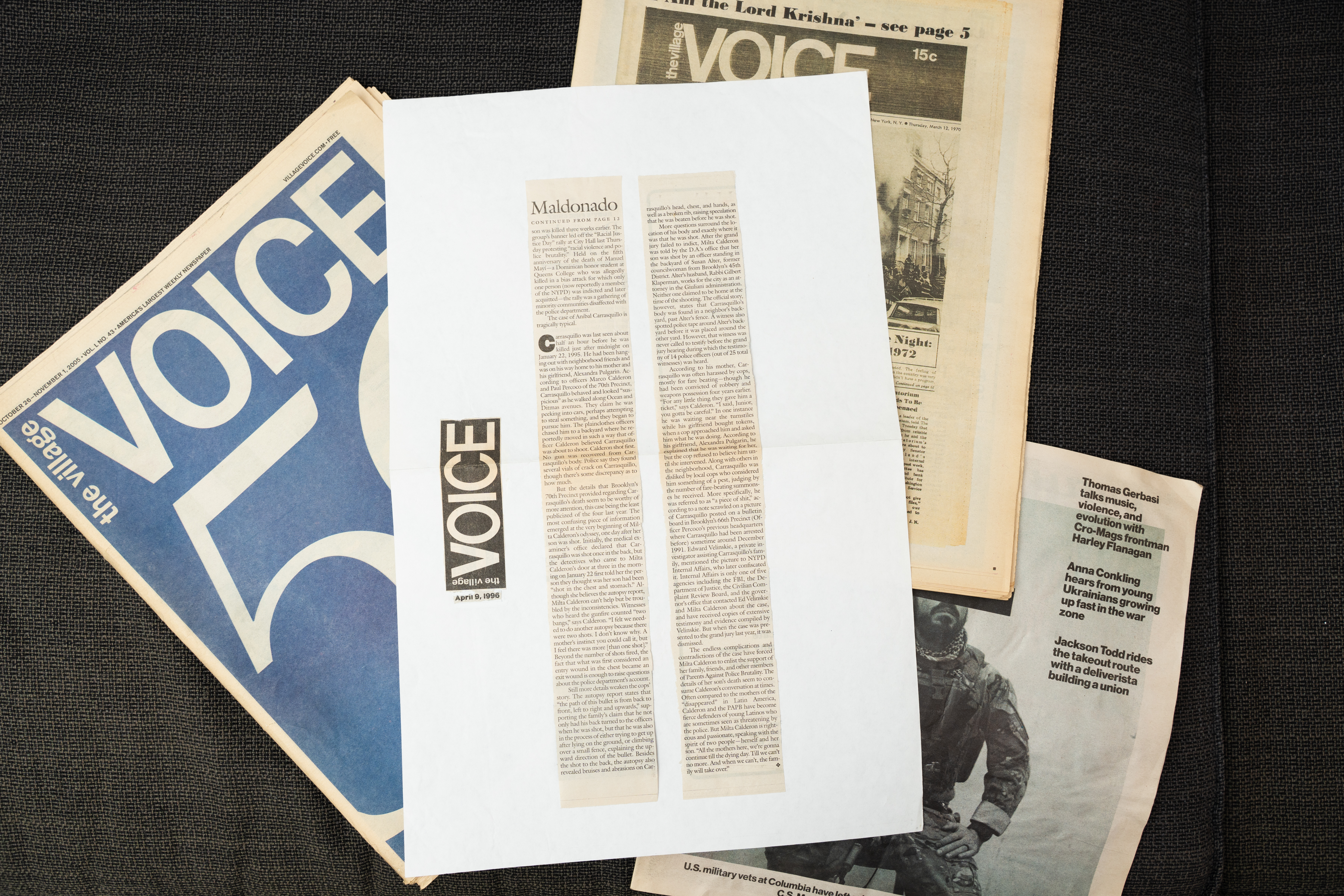
SM: First, I was an intern for Wayne Barrett, the Trump biographer who tore him apart way back when, and died the day of Trump’s first inauguration. He was a crazy white dude, a literal fighter. There were fistfights at the Voice. People were fucking brilliant and had a lot to say: it was called the voice for a reason, they let writers sound the way they really sounded. The office was a newsroom with cubicles. You know the Latinx Project offices, at NYU? That’s where the Village Voice used to be. After interning for Wayne I interned for Ed Morales, another staffer. Ed connected me to my first big published story as a writer, which was about the police killing of this Puerto Rican kid named Anibal Carrasquillo Jr. I remember meeting this guy “Panama,” Vicente Alba, who was a very well-known activist. Anibal’s mom and a few other moms formed a group called Parents Against Police Brutality, and I went down to the protests to cover them.
CDVS: Plaza de Mayo, New York edition?
SM: Basically.
CDVS: Were there a lot of people of color at the Voice at the time?
SM: I could count them on two hands, but they were cool as hell. There was another intern named Max Padilla who was Mexican, gay, from L.A.; later he went to Out magazine. I met a few longtime friends, Black women from the city like Janene Outlaw, a Harlem native who was the photo editor there. Also Kweli Wright, from Staten Island, who was the assistant to the editor. After Kweli, the next assistant to the EIC was Drew Gillings, from Miami, who I would work for years later at Vogue when he was research head there. Marcus Reeves from Jersey, who wrote a book on politics and hip hop several years later. There were definitely writers of color. The Voice had a real strong group of Black writers that defined it through the ’90s. They might not have been on staff or in the office, but they were freelancing: Greg Tate, Joan Morgan, Colson Whitehead. Quite a few wound up at Vibe and everywhere. I really got to know them when I started fact-checking. That’s when I started to make money at The Village Voice—about $12/hour, which was a lot for 1996.
CDVS: How did that start?
SM: One day this woman Natasha Stovall just came into the cubicles like, “Who wants to fact-check today?” And that was the beginning of a thirty-year career. Natasha trained me. Back then we didn’t have the internet: it was LexisNexis, reporters’ accordion files, and telephone calls. We went through people’s notes. We begged for backup. The interwebs eventually made life somewhat easier—before it killed us. Over the years I noticed that a lot of fact-checkers were people of color. We didn’t really trust white people, so we were good at that job. I really would question every little thing a writer had to say. I was like, “That was not the distance between Robert Downey Jr.’s house and the prison where he was doing time. Stop lying.”
CDVS: When did you start working for Latina Magazine?
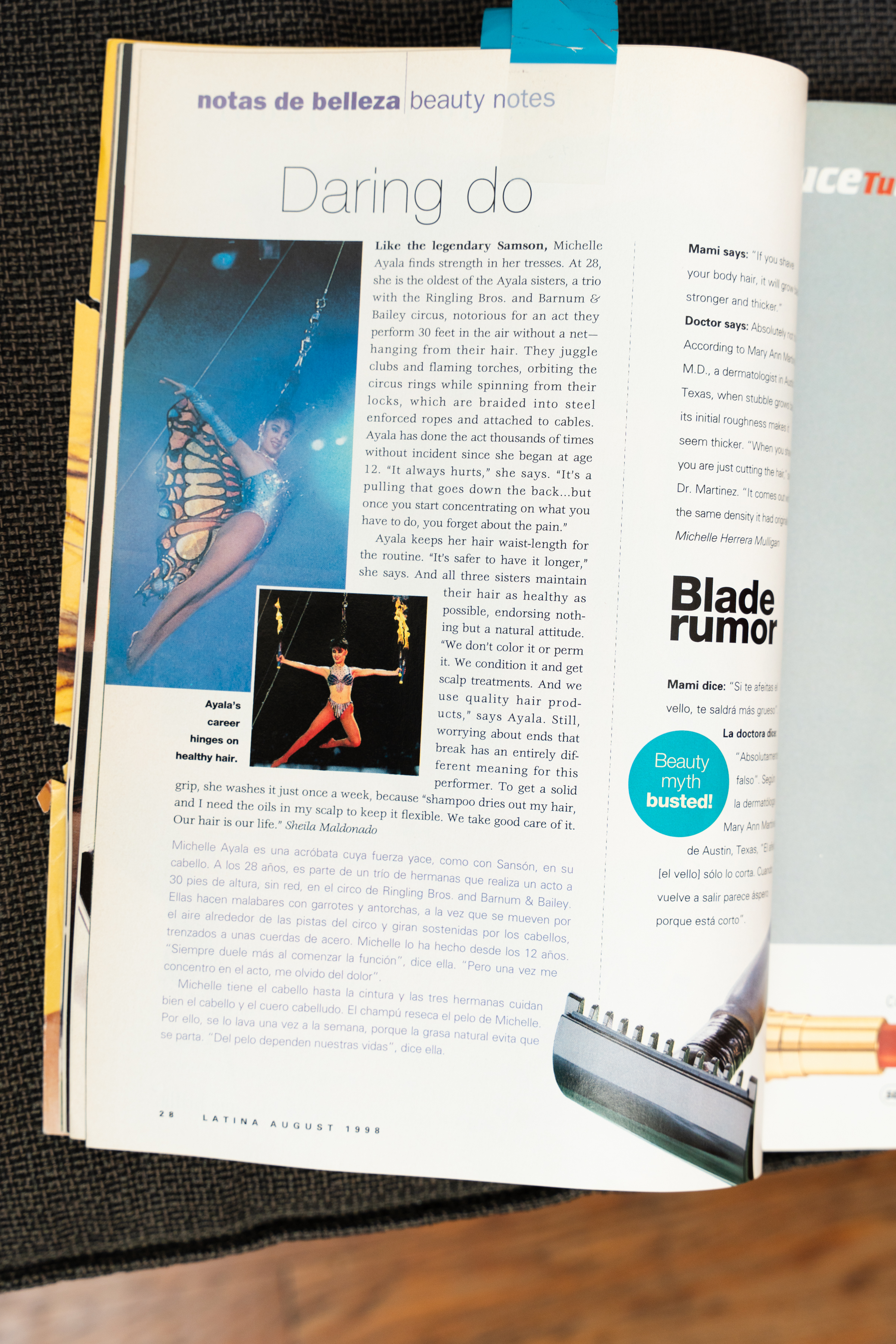
SM: The first issue of Latina came out in 1996 and I actually wrote about the launch party for the Voice. Ed Morales put me on because he had an article in there about green card marriages. I still have a copy in my archives. J.Lo was on the cover.
CDVS: Nuyorican supremacy. You know I TA’d for Ed Morales, right? His “Latin Music & Identity” course at Columbia?
SM: I mean, that tracks. Nuyoricans were overlooked by the world, but not among Latinos. As a Central American, I was quite aware of how un-overlooked you motherfuckers were to each other.
CDVS: You must’ve been like, “it’s a little loud, the way you’re complaining about being overlooked!”
SM: We could do that forever. Because then, in the context of Honduras, what would the Garífuna say? You know?
CDVS: Definitely. But that doesn’t mean the differences shouldn’t get articulated. What was the environment like at Latina, and what did you do?
SM: The parent company was Essence, and the first editor was this Cuban lady from Miami—a total nightmare. She was mean, even cruel, with a red pen. Taught me to never be that way. I came in on the second issue, as a fact-checker—they called it Research Editor—and then I became an Associate Editor in charge of some features. I had a salary: I think I made about $25,000 per year. There was this older playwright, Dolores Prida, who had an advice column—I’d read her work in college in a Latina literature class. She was amazing and stayed there a long time. It was a bilingual magazine, and the woman who handled the translations into Spanish was Consuelo Corretjer, the daughter of the iconic Puerto Rican poet Juan Antonio Corretjer. It was an honor to work with those women.
CDVS: Wow. And Juan Antonio Corretjer used to edit Pueblos Hispanos, one of New York City’s most important Spanish language newspapers. The poets Julia de Burgos and Marigloria Palma worked there as reporters and copyeditors. Did you get to do much writing at Latina?
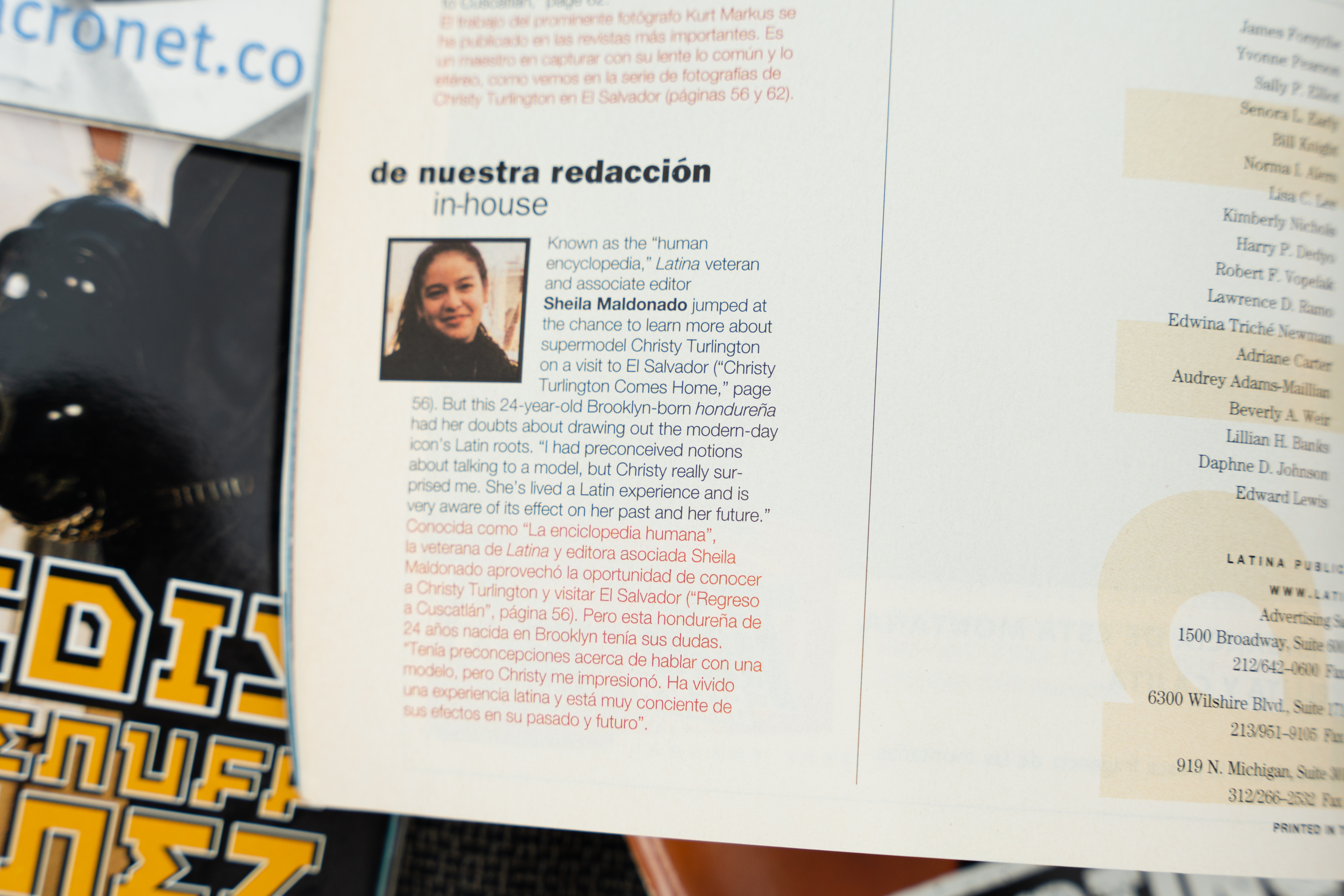
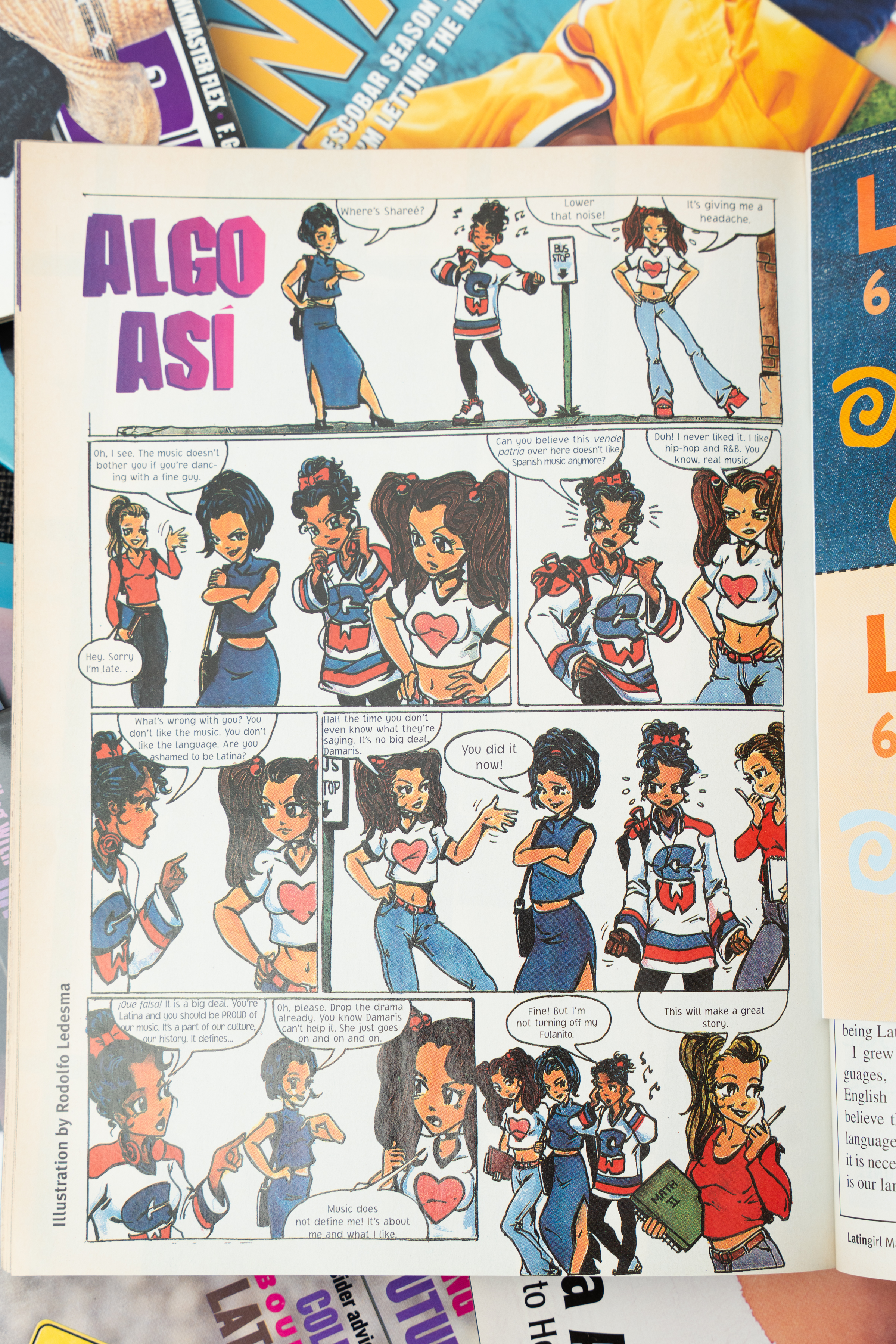
SM: It was a start-up, so I got to try everything: factchecking, editing, and yes, quite a bit of writing. I did lots of little blurbs for sections like “Triunfos” and “Mi Turno.” I did just one for the “Papi Chulo” section, on Benjamin Bratt. I did a few features. I remember one about a Salvadoran girl who was adopted by white people in Ohio: everyone told her that her family was killed in the war in El Salvador in the ’80s, but she believed they were still alive, and they were. She got to find and meet them again. I also interviewed Christy Turlington for the cover. Her mother was from a wealthy family in El Salvador, and Christy was doing philanthropic work back in the home country, so the magazine sent me there for the interview. It was fascinating and strange, because I have family in El Salvador that I don’t know well. There was a war between El Salvador and Honduras when my mother was a young woman, so there is a sad, hidden history that no one else cares about. I talked about it a bit with Christy and she was like, “Maybe the magazine should be interviewing you instead.” And because I’m an asshole, I said, “Yes, maybe they should.” But she was classy about it.
CDVS: You weren’t that happy at Latina, were you?
SM: Maybe it was me, maybe it was them, but it was never quite a fit. I’m realizing that I’m worried, with this interview, that I’m going to say things about people that will get me in trouble. Because I’m a very peripheral person, in the end.
CDVS: Well, that’s part of what’s interesting, because you’ve been watching from a critical distance for a long time. I think every position in the ecosystem allows for different kinds of insights. Plus, you’ve always had a historian’s spirit.
SM: You children and your context! But thank you. It’s true. I’ve stayed in writing every which way, the whole time, for forty years if you count those high school magazines. I have all these files, but there’s also so much anger and bitterness. I don’t think I could have done this kind of reflection ten years ago, or even five years ago. I’ve always felt on the outside, especially as a Honduran. My people are from an unrecognized de facto colony, and that fucked up status has everything to do with my perspective. Bitterness might be a colonial feeling. But I don’t think it should be erased.
CDVS: I don’t think so either.
SM: Latina is still a super tough memory. It was all new territory: probably the first American publication for Latinas, very well-funded, on a national scale. It attracted various cases of identity crisis, including mine. The founder was a Mexican American woman adopted by white people who didn’t see herself anywhere, and her biography drove the selling of the magazine. But it’s dangerous to sell your life story and make it into a business plan. That’s a concern I still have with writing by people of color. We all write from certain perspectives. But when it comes to selling the writing—what then? One woman at Latina said we would laugh about all of it in ten years. She was the only one I trusted at the magazine, but even she and I fell out eventually. No one was there to make friends. It was very competitive. Everyone was very young, clique-y, and catty. I’m sure I scratched back.
Another thing that made it hard for me at Latina was that I didn’t feel like a girly girl, and the more time I spent at women’s magazines, the more tomboy I became. I have always been very jeans and t-shirts, sneakers, a hoodie under a long wool coat, there more so. At Latina I would pitch jokes and sometimes they would fly: one time, for the beauty section, I interviewed a girl in the circus who hung by her hair, asking about her routine, what kinds of oils she used. It actually turned out cute. I enjoyed being part of a pop culture thing, and I appreciated the people who just dug in and did the work, like this great copyeditor whose name was literally “Joy.” I learned a lot.
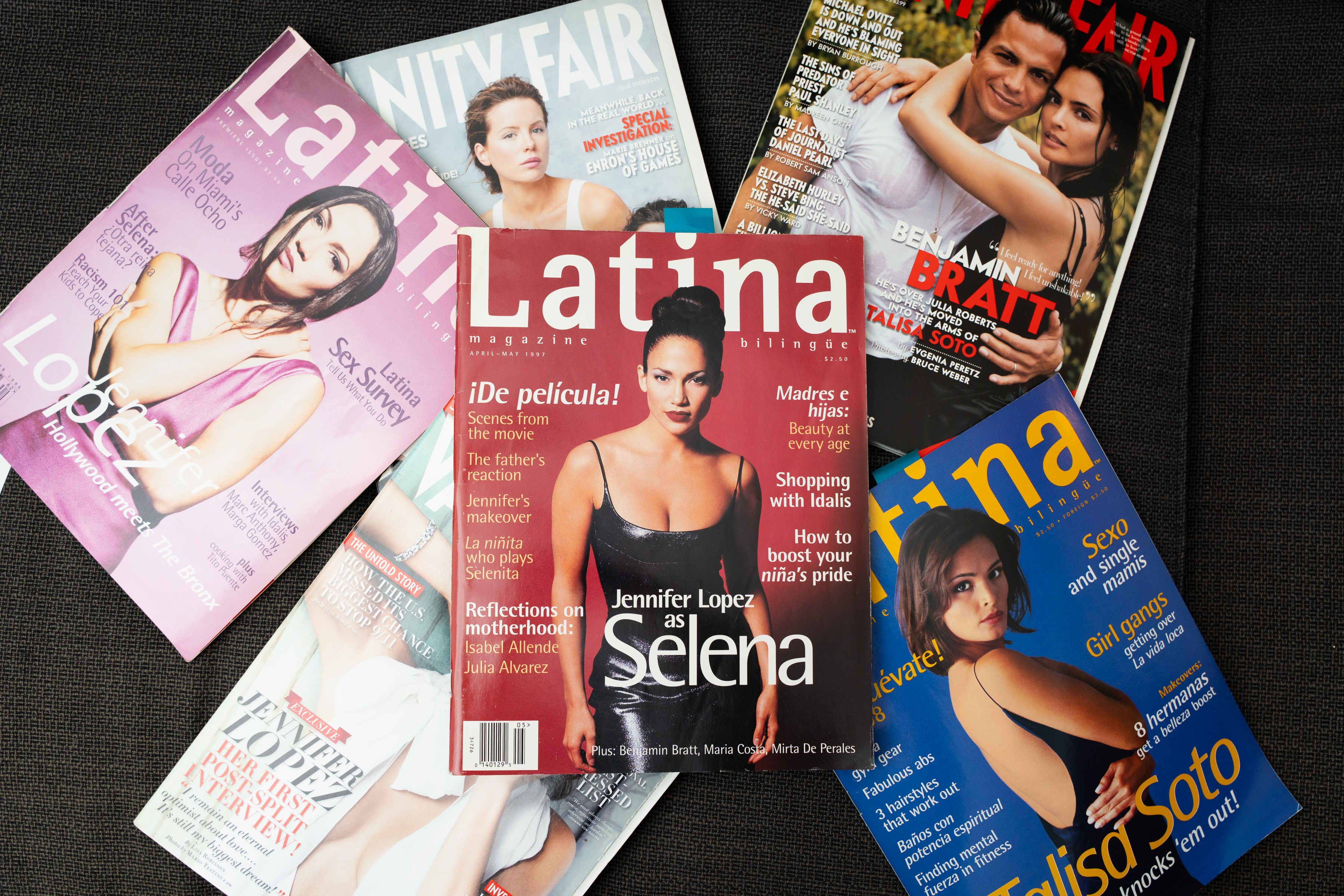
CDVS: How would you describe the magazine’s point of view, in terms of content?
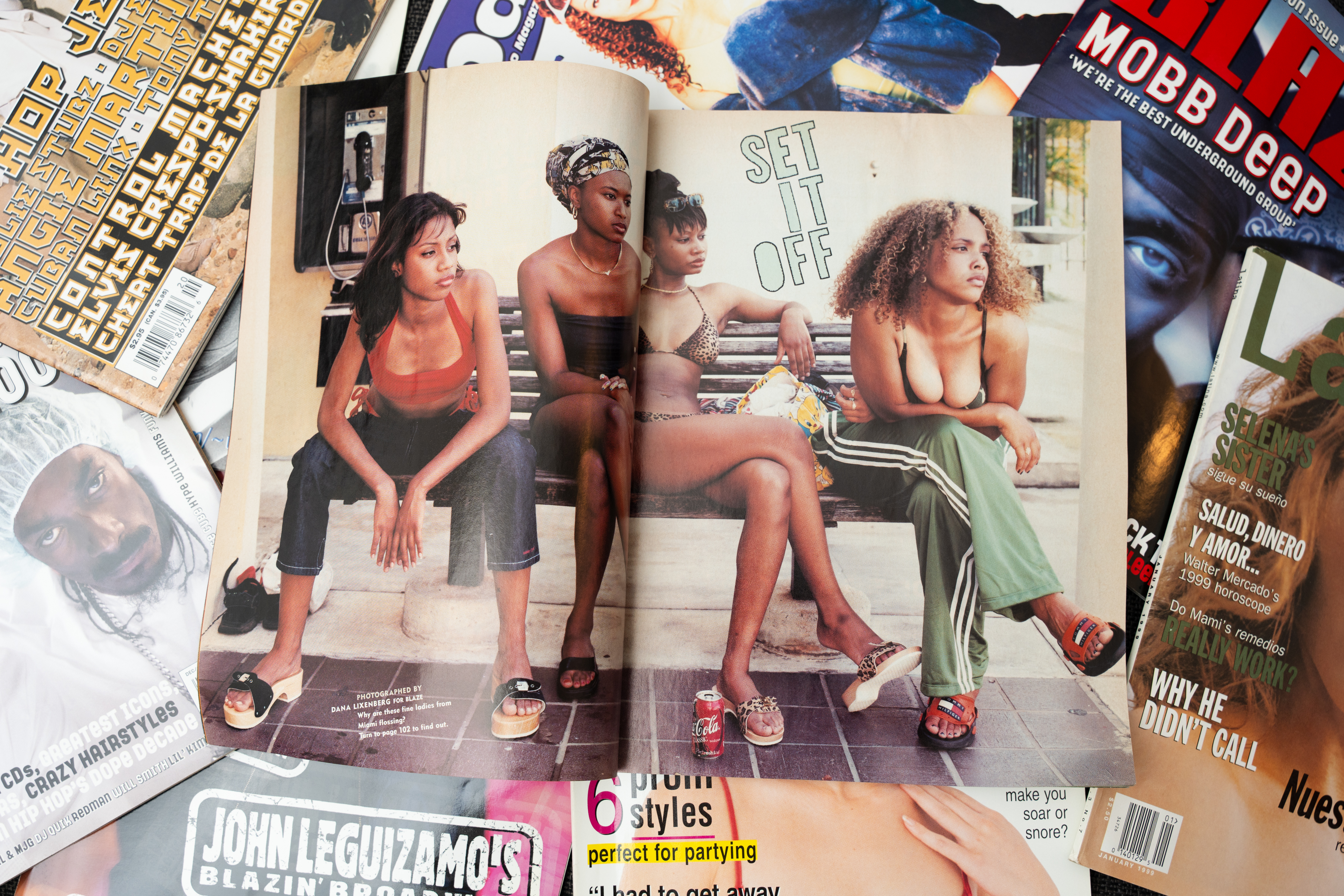
SM: The magazine was based in New York—a Caribbean city—but the publisher was Mexican from Texas. We were trying to aim for the larger audience, which in the United States is definitely Mexican. But when I was there the covers were majority Puerto Rican, the staff a mix that might have leaned that way too. That’s why it mattered when J.Lo played Mexican in her first two major movies: Mi Familia and then Selena. Selena was a million-dollar role, the first for a Latina, and the beginning of the J.Lo industrial complex. Selena wasn’t fun to me because her family was completely involved in that issue of the magazine, and we had to work the movie premiere. The movie promoted her father’s narrative, the whole story was cutesy and simplified. Behind the scenes we were all very critical, but later as I moved through Condé Nast and Hearst, I saw how common it was for writers to lean on press releases for their articles, and how much the commercial magazines depended on advertising. Latina was just the site of my first disillusionment. To be honest, I didn’t really like Selena anyway—sorry! I thought she was beautiful, but she just wasn’t what I was into.
CDVS: What were you into at the time? Still hip hop?
SM: My cassettes and CDs were mostly hip hop. When I came back to New York in ’95 I was hanging out with my boyfriend and his DJ brother, who did some Native Tongues shows. They were into jungle, drum & bass. We were smoking all the time and going to spots like The Cooler on 14th Street. Roni Size was breaking out. This was still a golden era for the hip hop hippies—what they used to call Backpacker stuff. Mos Def and all those people were Backpackers. Then there was D’Angelo and neo-soul, Erykah Badu and that whole Brooklyn Moon scene. In high school I didn’t get to party—I was a lot more sheltered then, living at home, a Spanish daughter on a tight leash—so after I graduated from college I was playing catchup at the clubs. We would party on the off days if we could, a random Tuesday or Sunday. One of our favorite clubs was on B and 2nd: “Robots” or “Save the Robots.” A guy got stabbed there. It was mostly house. We took towels and little bottles of baby powder to the dance floor. I wasn’t the best dancer but weed and beer made me better, being surrounded by the best dancers made me better. Compared to Latina it was a completely different world, very specifically New York. So you can see why Selena wasn’t relevant to me.
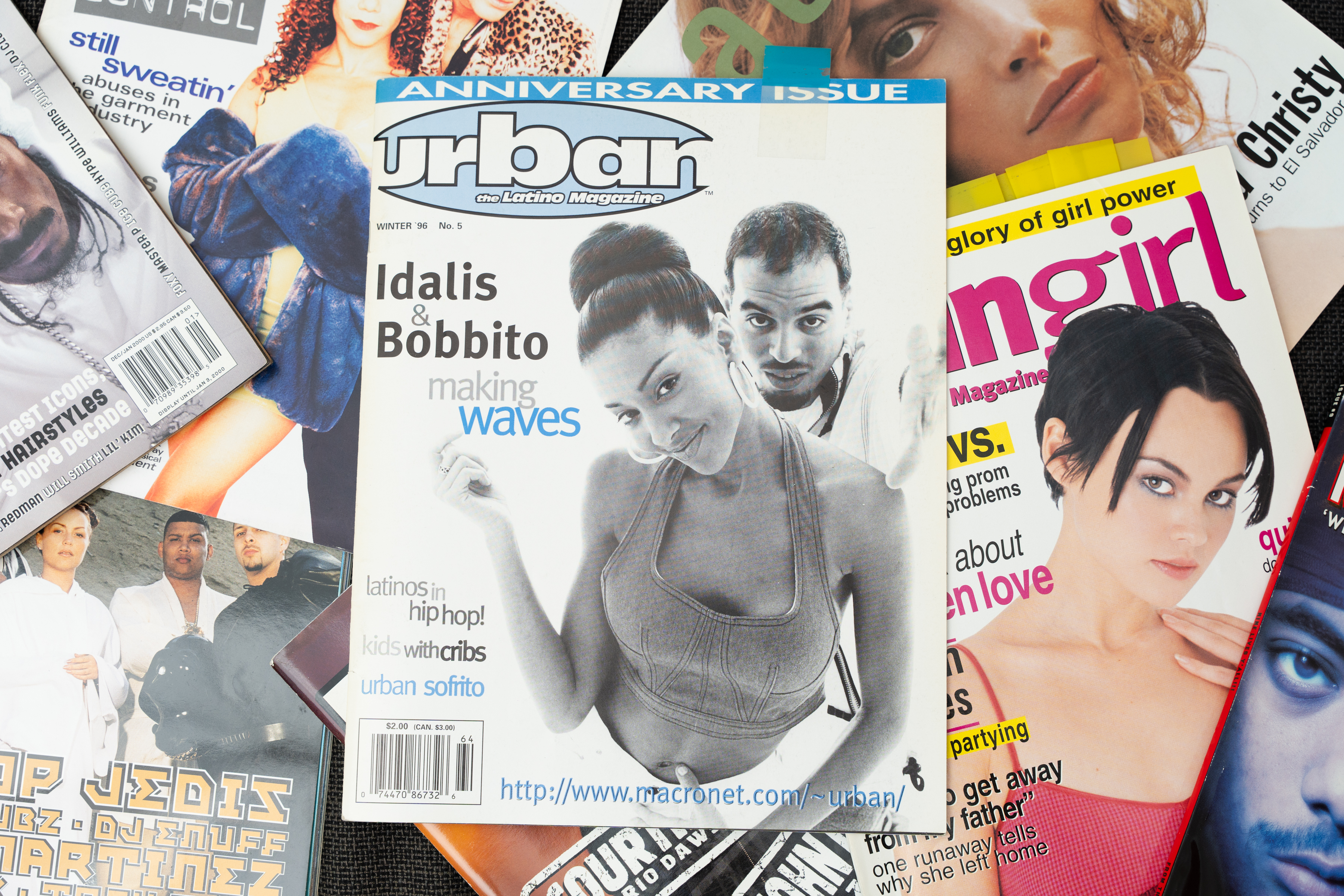
CDVS: Were you doing any music journalism, either at Latina or The Village Voice?
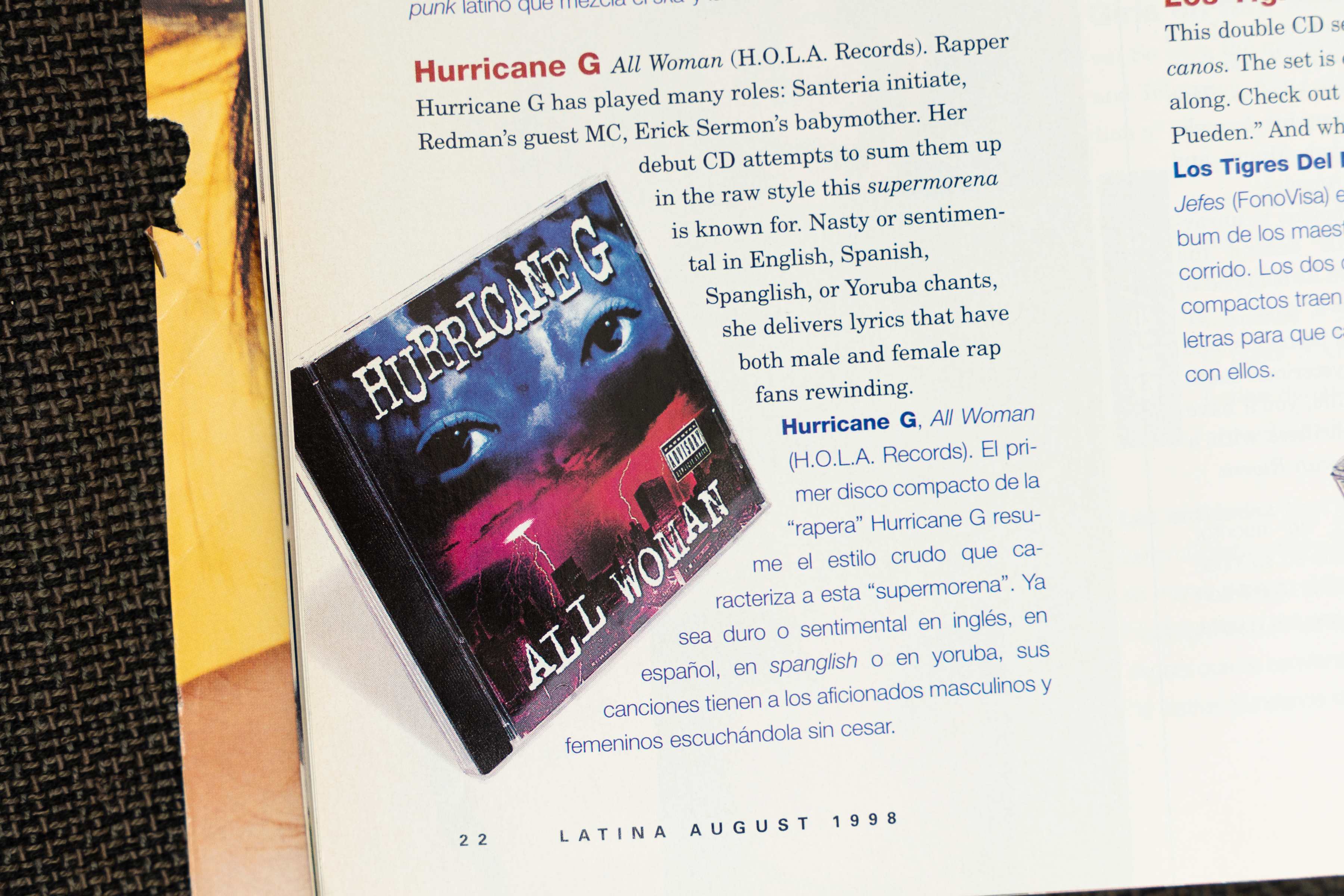
SM: My first little review was for True, another hip hop glossy based in the UK, I think, about some dude named Father MC. A little later I wrote a small review for Vibe of Elsie Muñiz, a Puerto Rican r&b singer. At Latina I remember writing a blurb about Hurricane G, but I wasn’t very involved in the entertainment stuff there; that was Lilliam Rivera’s editorial terrain. I wrote more about music for Urban Latino, an independent magazine based in Queens.
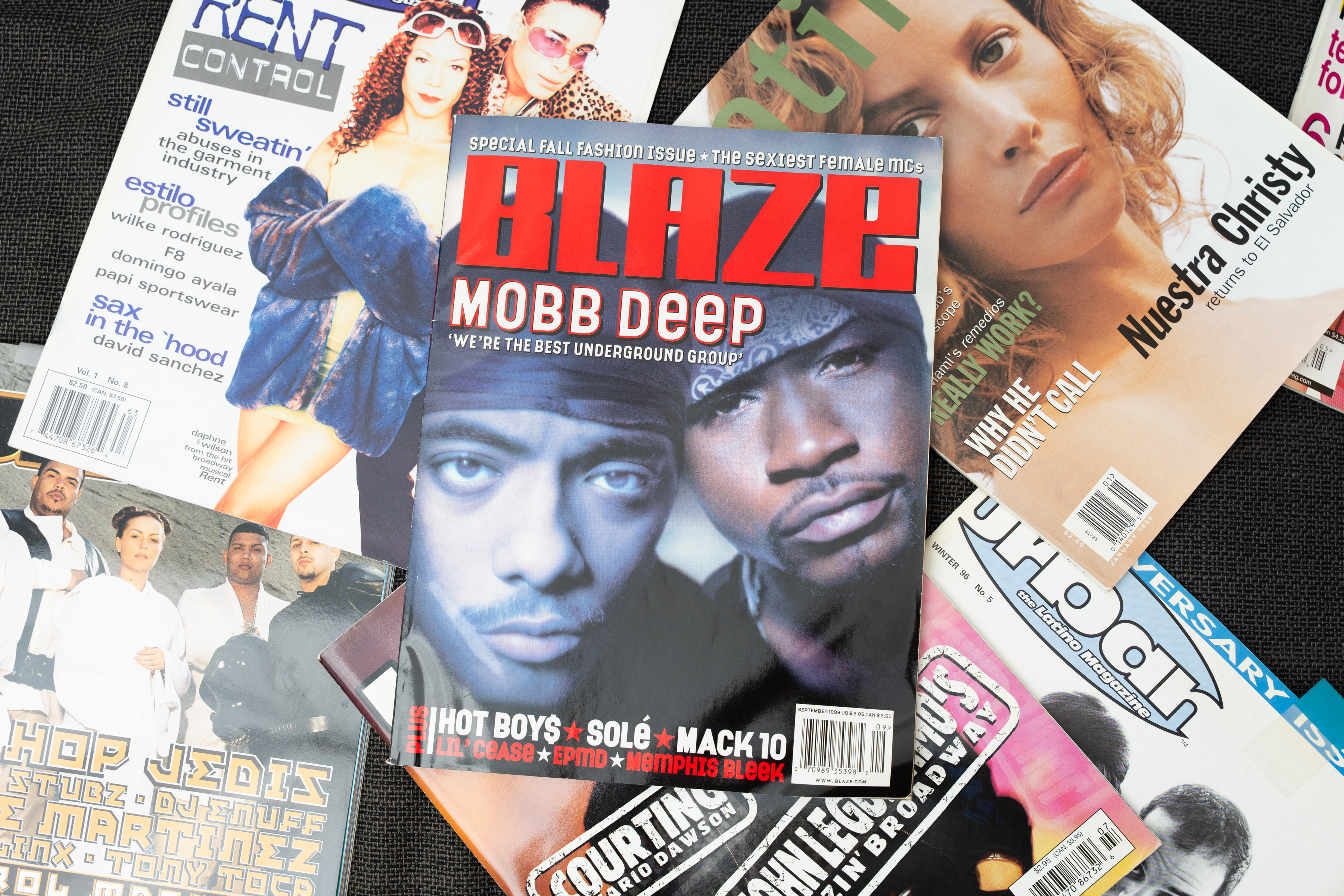
Urban Latino was way more of a match for me—more of a New York magazine, very Caribbean, though the founders were Colombian. Which is technically Caribbean too, like Honduras, just not the islands. I wrote a lot of cover profiles for Urban. My first was an interview with Bobbito García, the Nuyorican DJ who had that legendary hip hop show with Stretch Armstrong on KCR, and a column at Vibe. He was really a jack-of-all-trades. He shared the cover with Idalis, the Puerto Rican VJ at MTV who had been a freestyle singer. I was at the Voice when I did that piece. Later I did a cover story on Tony Touch, who was photographed alongside other Latinos in hip hop: DJ Enuff, Angie Martinez, Cuban Linx, someone else I can’t remember. I also remember doing a cover story on John Leguizamo. I don’t think Latina was happy about that.
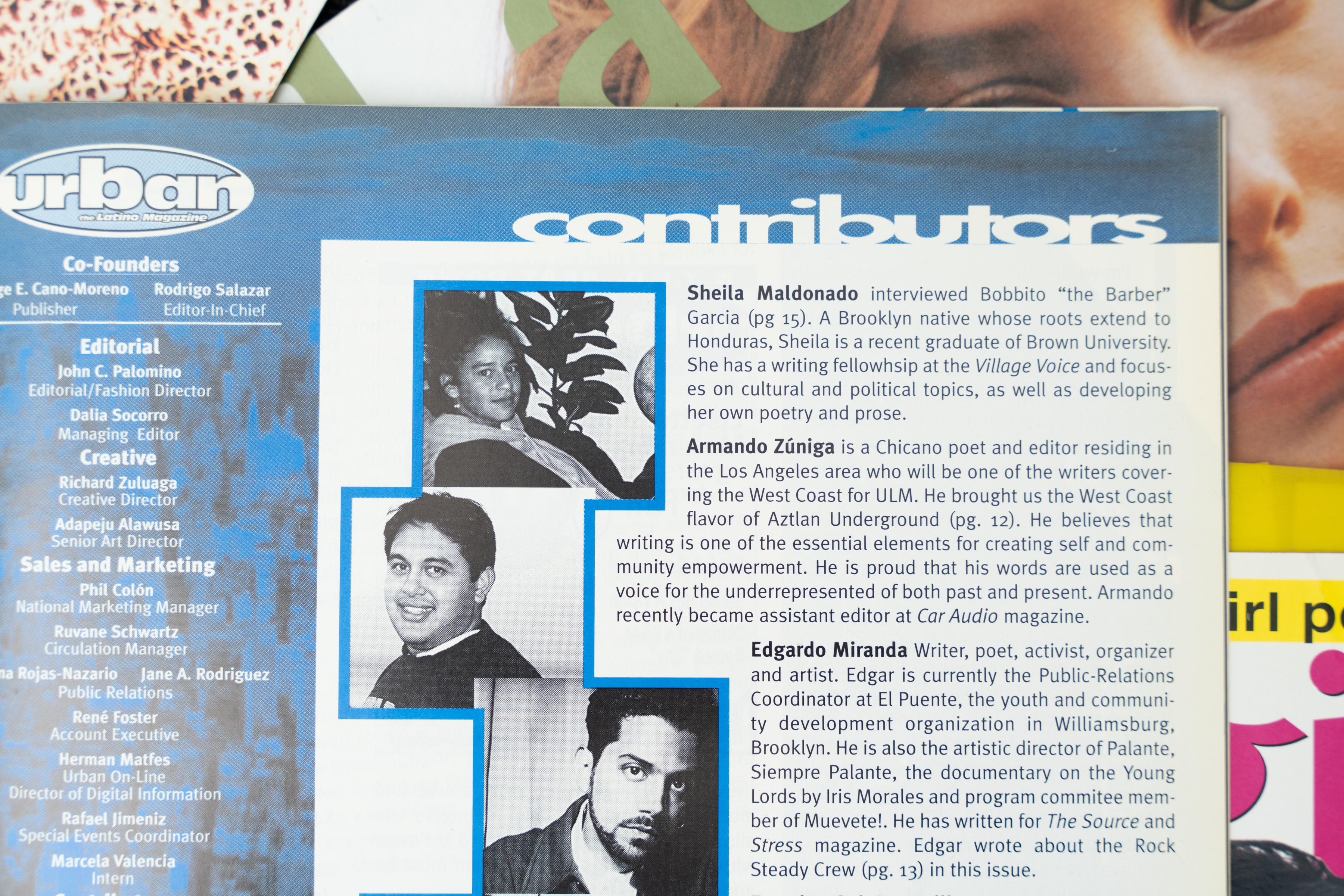
CDVS: So all of this stuff was concurrent with Latina?
SM: Yeah, mostly. I wrote for Urban Latino until about 2000. They were independent, which was cool, but they were also unpredictable. They didn’t even have dates on the magazines, no real schedule. They came out maybe every two months. The first few were black-and-white, then they got glossier and more colorful, but they never really got organized. I remember they messed up my name in the byline of a cover story. Typos, rookie mistakes. After a while they took longer to pay me and I had to harass them for my checks. They did connect me to my next job, though—one of the people who worked at Urban Latino became the Editor-In-Chief of LatinGirl, which was supposed to be like Latina Seventeen. I worked there very briefly as a Senior Editor. The highlight, there, was my interview with Maxwell. We talked about God.
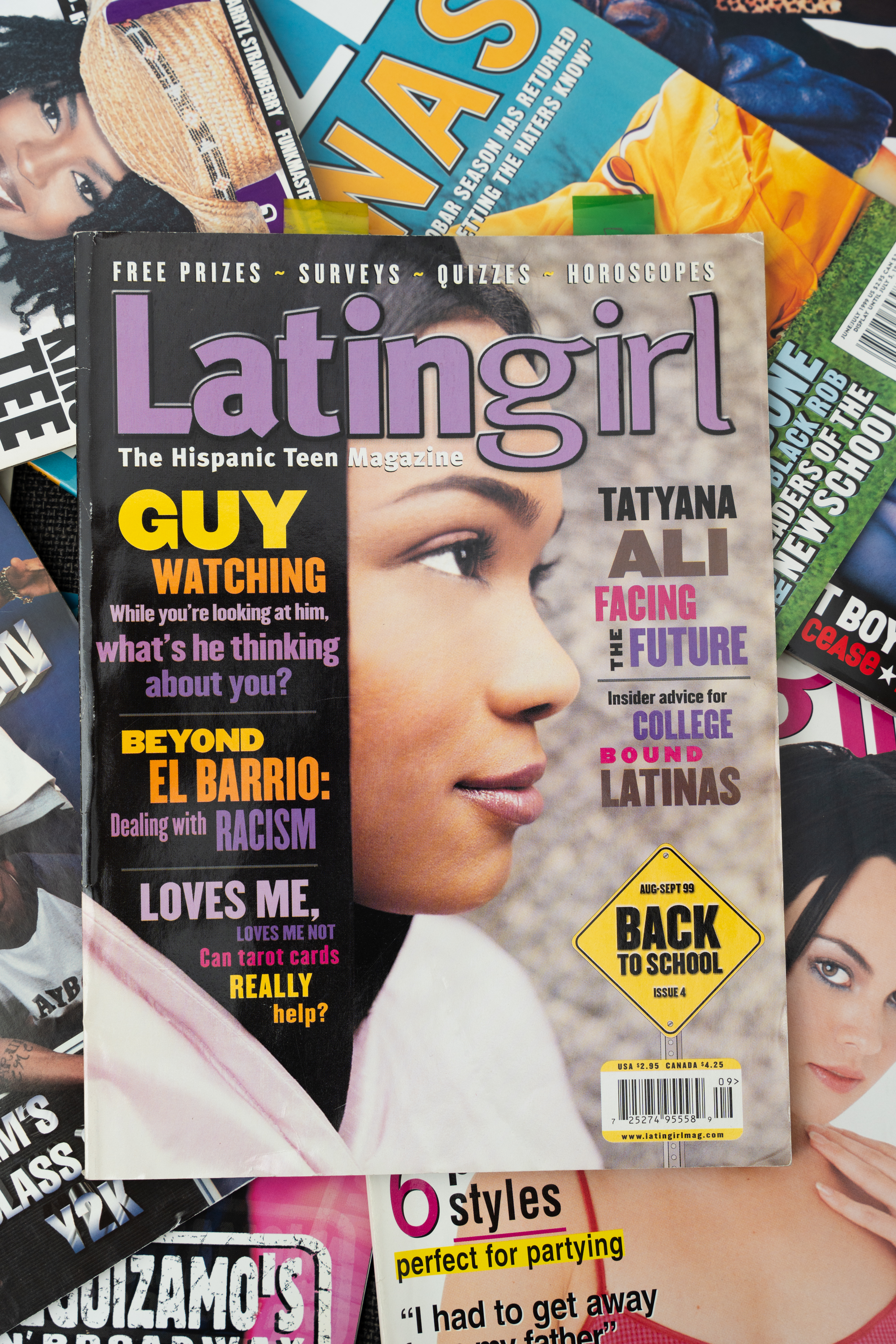
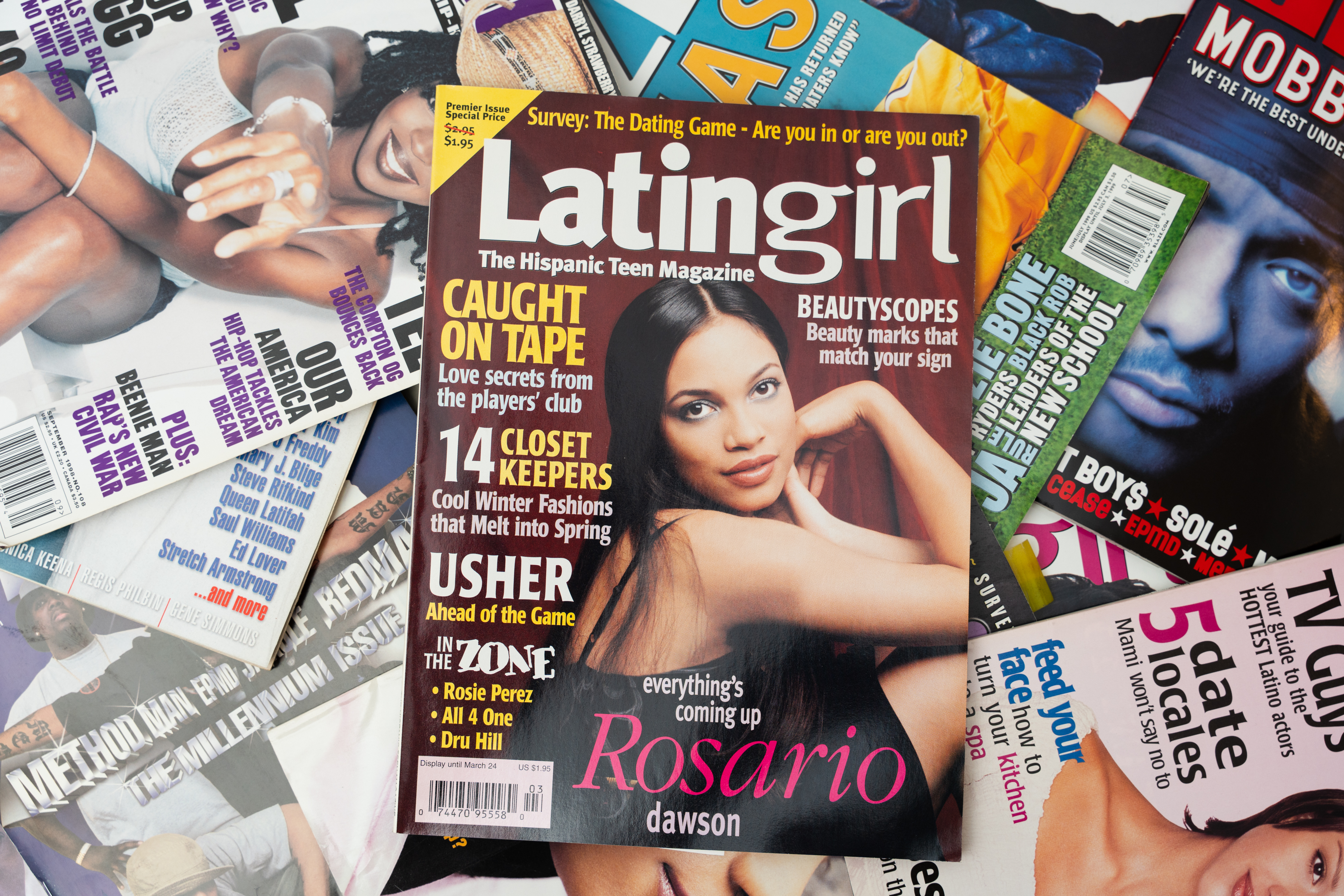
Soon after that I jumped over to Blaze, thanks to Janene from the Voice who was Blaze’s photo editor. She had also worked for The Source. Blaze was a Vibe spin-off, where I was also a Senior Editor. Mimi Valdés was the EIC. When Biggie and Tupac died they almost took the whole industry with them. It was like walking into a burning building. We featured a lot of newer rappers: Juvenile, Eve, Ja Rule. By then I was listening to Björk and all kinds of electronica, like this guy Tricky in the UK who did trip hop. Tricky, a midwest producer who made ‘Who Dat’ a hit that summer for JT Money and Solé. I wanted to get them together for a Blaze interview, like “Tricky Meets Tricky.” But they wouldn’t do it because I heard they were fighting over their name.
CDVS: Beef ruins everything!
SM: To be honest it was a chaotic year. It was 1999, the end of the century and definitely feeling like the end of the world. Y2K was the next apocalypse supposedly. I was going through a breakup with that boyfriend I partied with so much, and Blaze drove me crazy with late night work, all those hours waiting for editors to send along copy. I never got overtime. Sometimes they would cover cars home and pay for dinner but sometimes not. I didn’t want to stop liking music, but I was getting disenchanted working behind the scenes. I decided it was better to go freelance.
CDVS: What was freelancing like back then?
SM: By the end of 1999, I was mostly fact-checking, sometimes editing, rarely writing. I worked for Rolling Stone and Essence and lots of little new websites when the internet was just beginning to threaten magazines. I was at a place called Dgolpe—something like that—a website all about Latin music. I got to write little blurbs about Maná, about Gilberto Gil. It was trying to be encyclopedic, like AllMusic. I left them for Vanity Fair, where I worked from 2000 to 2002. Natasha from the Voice was there and got me in. Vanity Fair was legit, they paid me like $26/hour. For freelance writers it was $2/word. They let me go in the aftermath of 9/11, when there were a lot of cutbacks everywhere. By then I was in grad school for poetry at CCNY. I started teaching poetry in public schools through CCNY and then through the Teachers & Writers Collaborative. I went back to magazines a couple of years later when I got a break at O at Home, Oprah’s second magazine, at Hearst. I also started teaching comp and creative writing as an adjunct in the CUNY system. That’s how I got health insurance, through the CUNY union.
I didn’t go back to Condé Nast until 2011 and then I was mostly contracting for Glamour and Lucky. There was a great group of fact-checkers at Glamour: Akiba Solomon, Carla Murphy, Shelley Nicole Jefferson, Sylvia Espinoza. Denise Burrell-Stinson, a friend from the independent school programs brought me on at Lucky. It was with Lucky that we all realized the internet was going to take over for sure. Lucky was supposed to be a catalog magazine, where you could buy whatever they featured. The editor-in-chief, Eva Chen, sort of branded this one pose on Instagram: a picture of her feet up on the seat of the car driving her to work, featuring her shoes and bag, a different set every day. Later, Instagram actually hired her.
CDVS: It’s crazy, the industry has contracted so much. You’re talking about almost thirty years ago, and the rates are literally lower now than they were then. Did you leave magazines behind for financial reasons?
SM: Not exactly. Factcheckers could get paid well, but we were also scapegoats, and definitely expendable. As freelancers we weren’t on the masthead; our names didn’t appear in print. Especially not at Condé. I was trained by great heads of research: Derryale Barnes at Essence and Pat Singer at Vanity Fair. Pat was top of the game. She said something once: “if a fact-checker does their job, you won’t see them.” Like we were supposed to be invisible. One part of me liked that idea, but I also remember feeling like a ghost, like I was floating through those offices, haunting and being haunted. I appreciated a steady gig but I didn’t always want to be unseen. And I was moving towards what I really imagined for myself, which was creative writing. There were a few fact-checkers at Vanity Fair that were pursuing degrees. Production in magazines was almost like its own grad school too. There was downtime between stories, time to write poems, imagine other lives. I told one dude that I was going to grad school for writing and he was like, “Ah the MFA, the salary reducer.” But CCNY wasn’t even offering an MFA at that time—it was an MA, and even today that distinction keeps me from applying to some teaching jobs. At least I feel free to say what I want. I don’t really worry about a job taking action against me for it. The institutions are truly revealing themselves nowadays.
CDVS: Sometimes I think about the fact that journalism started collapsing as an industry right when those affirmative action programs became more robust and started opening up viable professional channels for young people of color in the media, the arts. There was that little boom in the ’90s, and now what? Affirmative action is illegal.
SM: It always happens that way. CUNY was free until the 1970s when students of color became the majority. We are watching it fall apart in real time, the worst-case scenarios unfolding. But sometimes I feel like the world has not collapsed enough. I have always had an apocalyptic brain because of a Nostradamus doc narrated by Orson Welles that I saw on HBO when I was like 10. Also because of the Maya and their collapse, I read about that around that age, too. It’s not going down quite like all that but it is going down. I want to go underground—by which I mean delete Instagram. I want to drag Cabrón Naranjado across the Rio Grande in a cage. I’m hustling till I break. I have been broken. I’m here way beyond burnout, especially with the teaching. I’m trying to return to some rhythm always. Otherwise I have no plans, I imagine some more books, some pictures, but plans are harder.
CDVS: Do you still fact check?
SM: The last big job I had was for T: The New York Times Style Magazine back in 2023. I did a major feature about street food in Mexico, on my own at home tracking hours in a Google doc. It was endless: each piece had so many little details. I was just calling street vendors in Mexico City on WhatsApp, having midnight conversations about what spice they put on the corn. Each fact is a wormhole. The Times hasn’t hired me since, maybe because it was so many hours.
CDVS: They have the money, but they’re not spending it in the right places. Just last year The New York Times Magazine—the weekly, the one where I contribute—canceled factchecking for the “front of the book,” the shorter columns. There’s no reason there should be a lower standard of facticity for culture stories. The spice on the corn matters—as the kids say, we’re losing recipes! That’s one reason I wanted to have this conversation with you. You keep track. I know you like to call your home archive “hoarding” but I can’t endorse that as a complete description. Where do you think that impulse comes from?
SM: I think it’s because I know I’m not part of a typical experience: an “other” even among Latinos, an anomaly, a weirdo, someone who flies below the radar. I’ve always said I’m my own case study. So no one is going to document me like I do. To be honest I hold onto things too long in general. Far too sentimental. I can dwell a bit much. I wish I could throw things out and make room for the new. I wish I had a place for the overlooked past. I wish I had a clutter doula.
CDVS: Maybe this is like the first trimester.
SM: I am hoping it is the second, any which way it’s taking a long time to get this together, a long gestation. It’s hard to create distance. Perhaps piecing it together here might help. I only really believe in the things I make myself. My books have taken me places, literally: Puerto Rico, Honduras, Spain, Argentina. All over this country for sure. I meet people who feel displaced and not right with how things are, for whom doubt is belief, who make their own particular ways. Those are the ways I know.
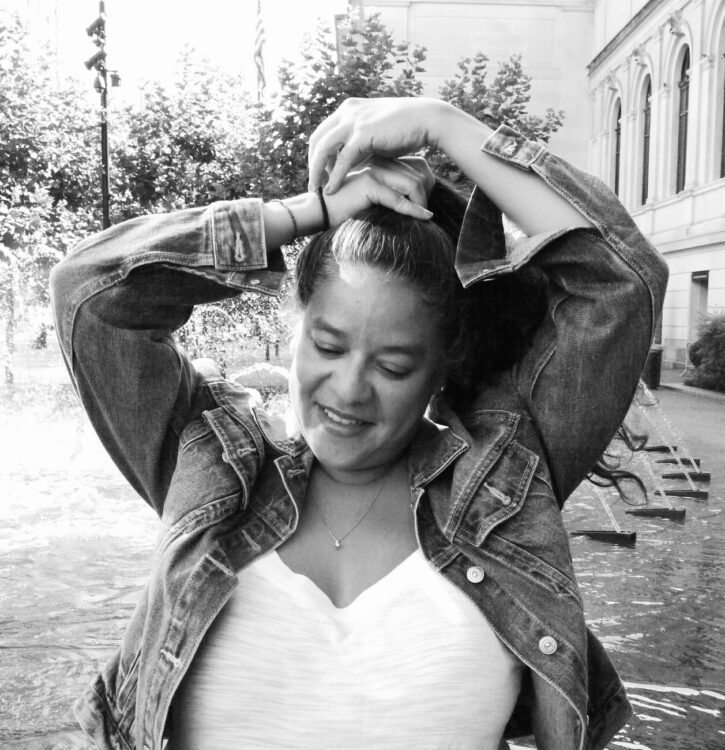
Sheila Maldonado is the author of the poetry collections that’s what you get (Brooklyn Arts Press, 2021) and one-bedroom solo (Fly by Night Press / A Gathering of the Tribes, 2011). She is a CantoMundo fellow and a Creative Capital awardee as part of desveladas, a visual writing collective. She teaches English for the City University of New York. She was born in Brooklyn, raised in Coney Island, the daughter of Armando and Vilma of El Progreso, Yoro, Honduras. She lives in El Alto Manhattan.